Project Print Management delivers a carefully planned Bespoke Scaffold Wrap solution during major hotel renovation works
When renovation work takes place at a prestigious, fully operational London hotel, keeping the working environment safe, professional and visually presentable is a major consideration. For Project Print Management, the challenge at The Grosvenor Hotel on Park Lane was to create a high-quality bespoke scaffold wrap that would conceal the temporary hoist and associated construction works, while also fitting seamlessly around a complex scaffold structure.
The project required more than simply printing and installing a large piece of mesh. The location, the shape of the scaffold, the operational requirements of the hotel and the phased nature of the renovation all had to be considered from the very beginning.
Project Print Management was brought in to provide a bespoke printed scaffold wrap solution designed specifically around the temporary works. The finished installation needed to look clean and professional from surrounding streets and buildings, while allowing the renovation project to continue behind the wrap.
Working around a complex scaffold structure for bespoke scaffold wrap
One of the first challenges was the unusual shape and configuration of the scaffold.
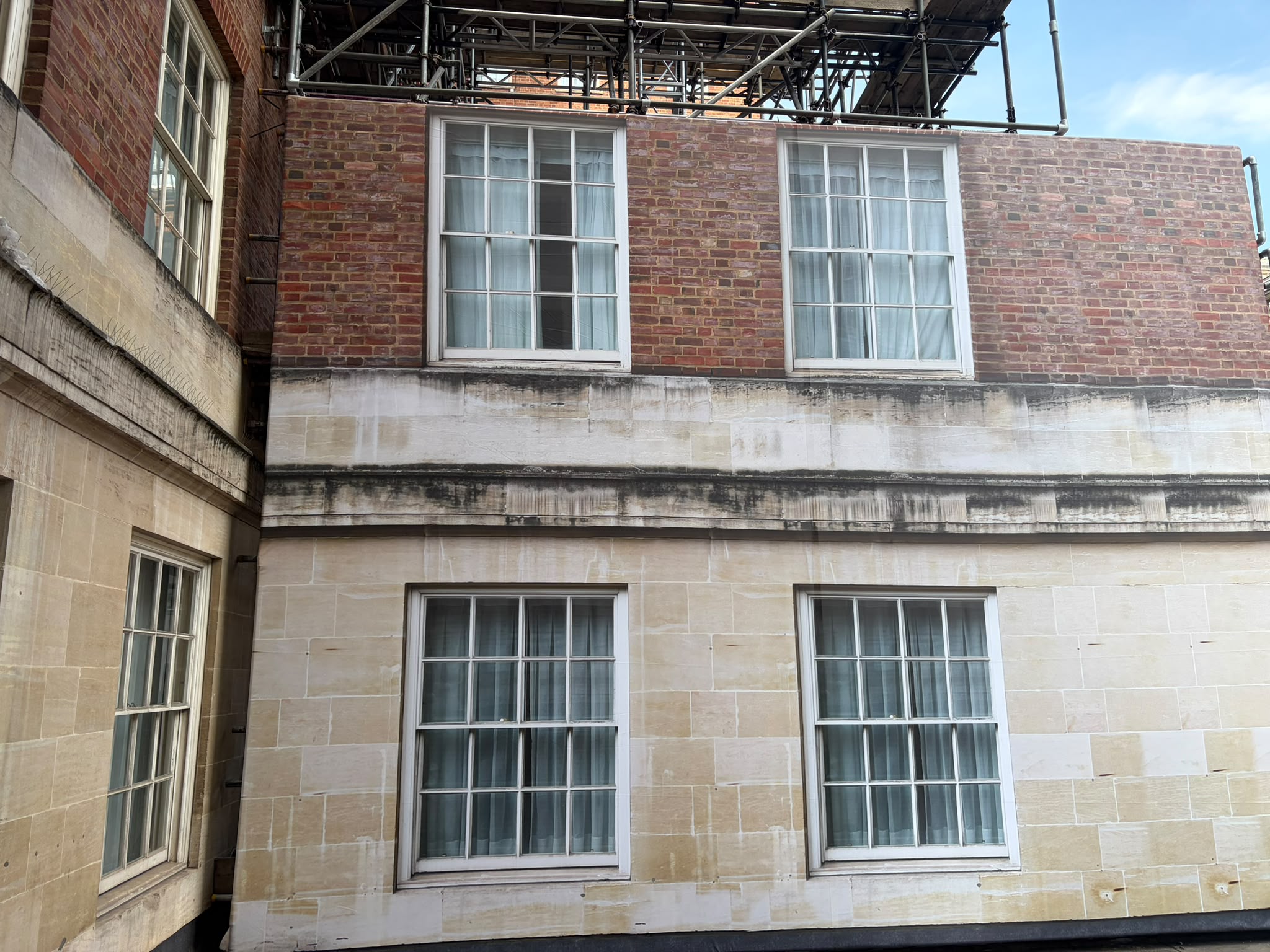
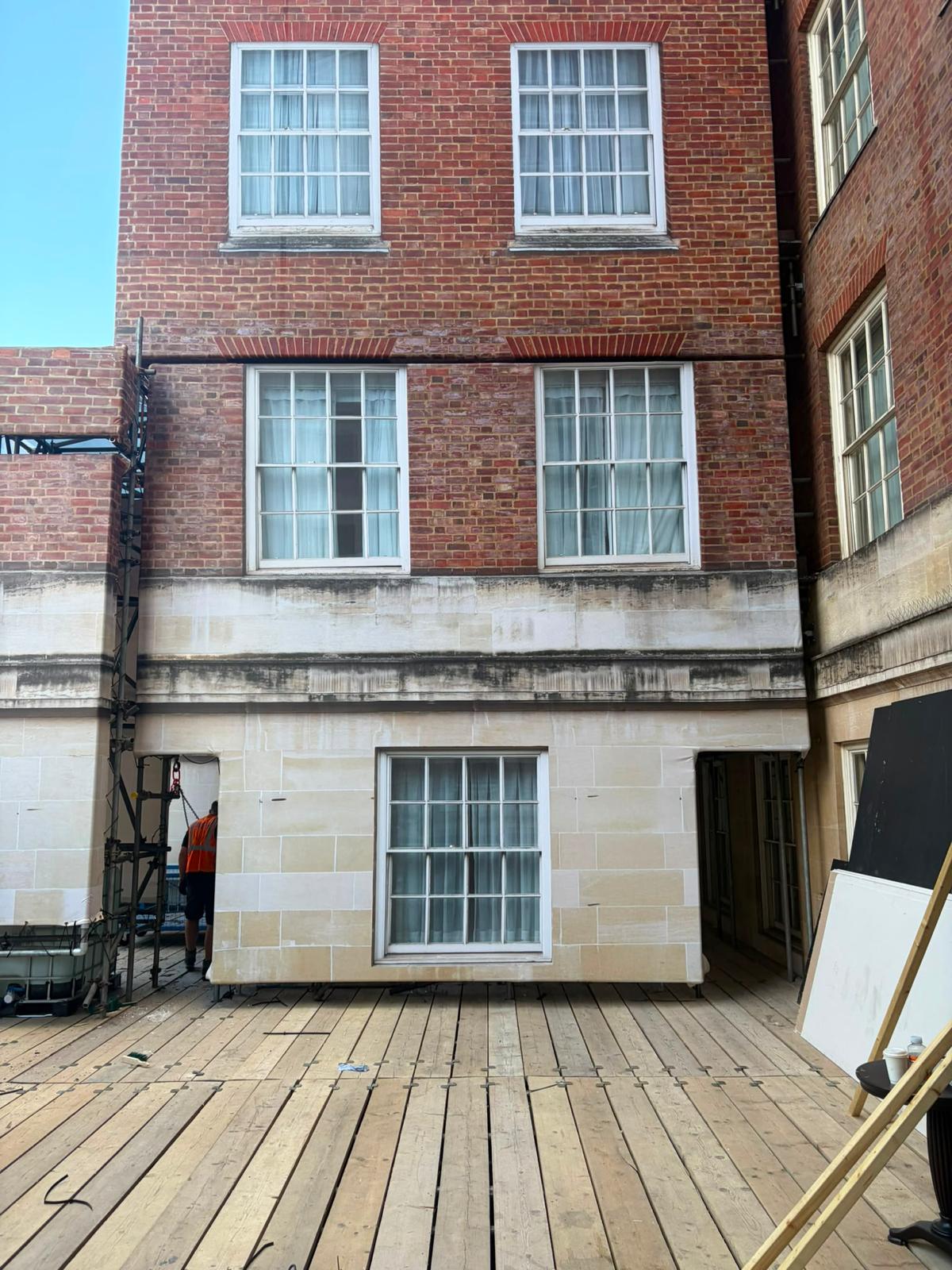
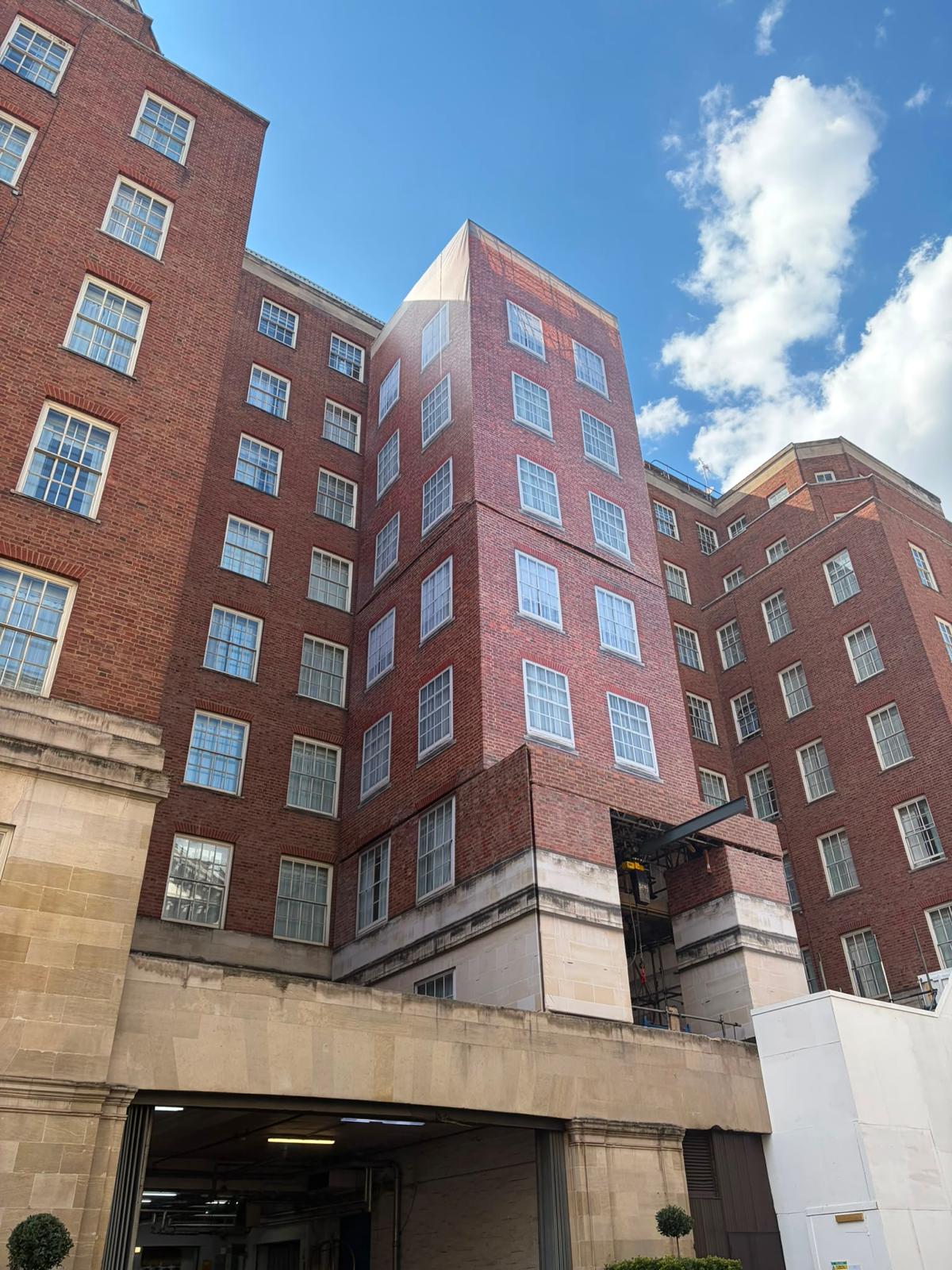
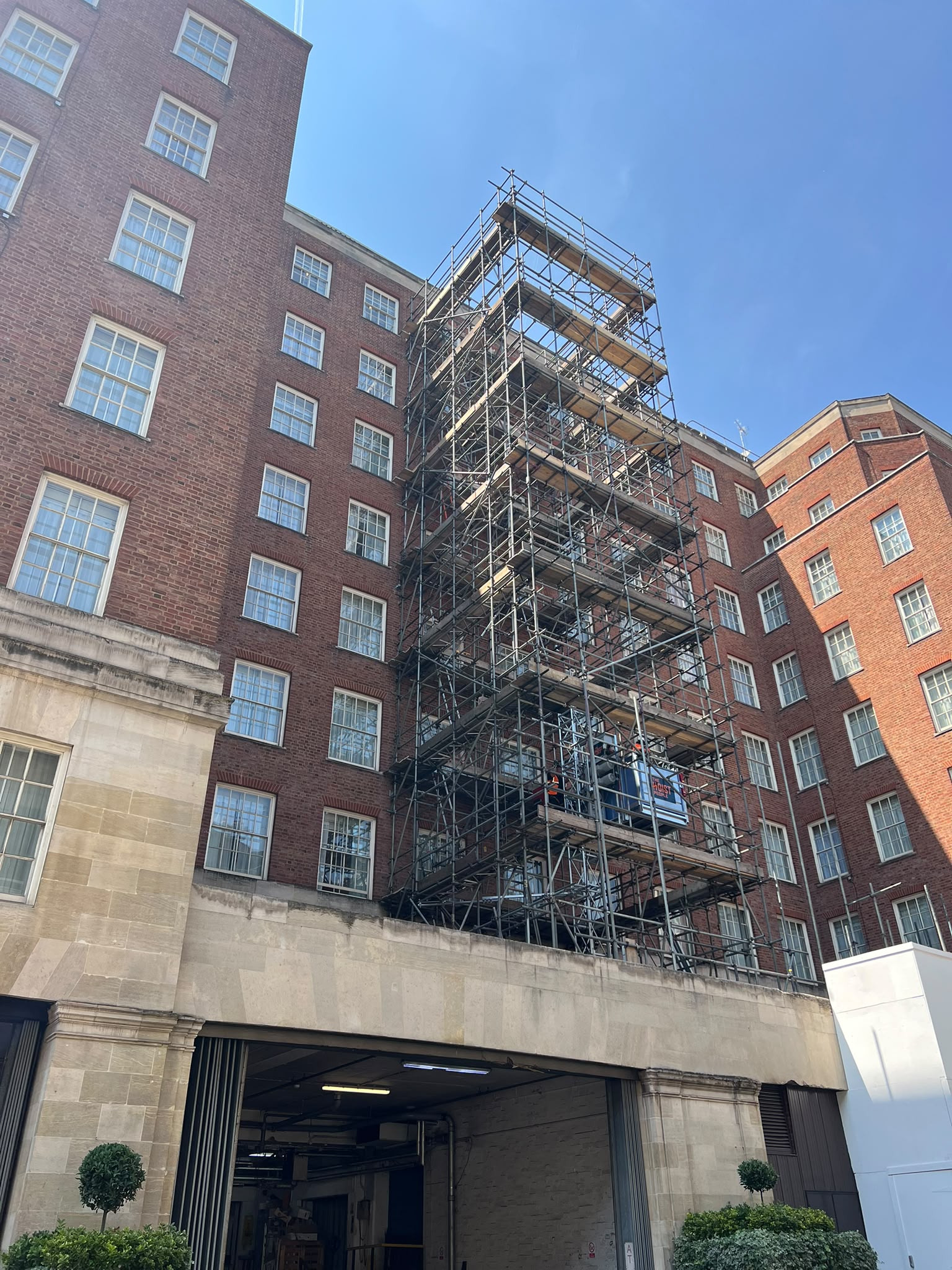
As the photographs show, the scaffold structure rises through several levels and incorporates a number of changes in direction, platforms and access areas. Rather than having one simple rectangular elevation to cover, the available areas had to be broken down into individual sections.
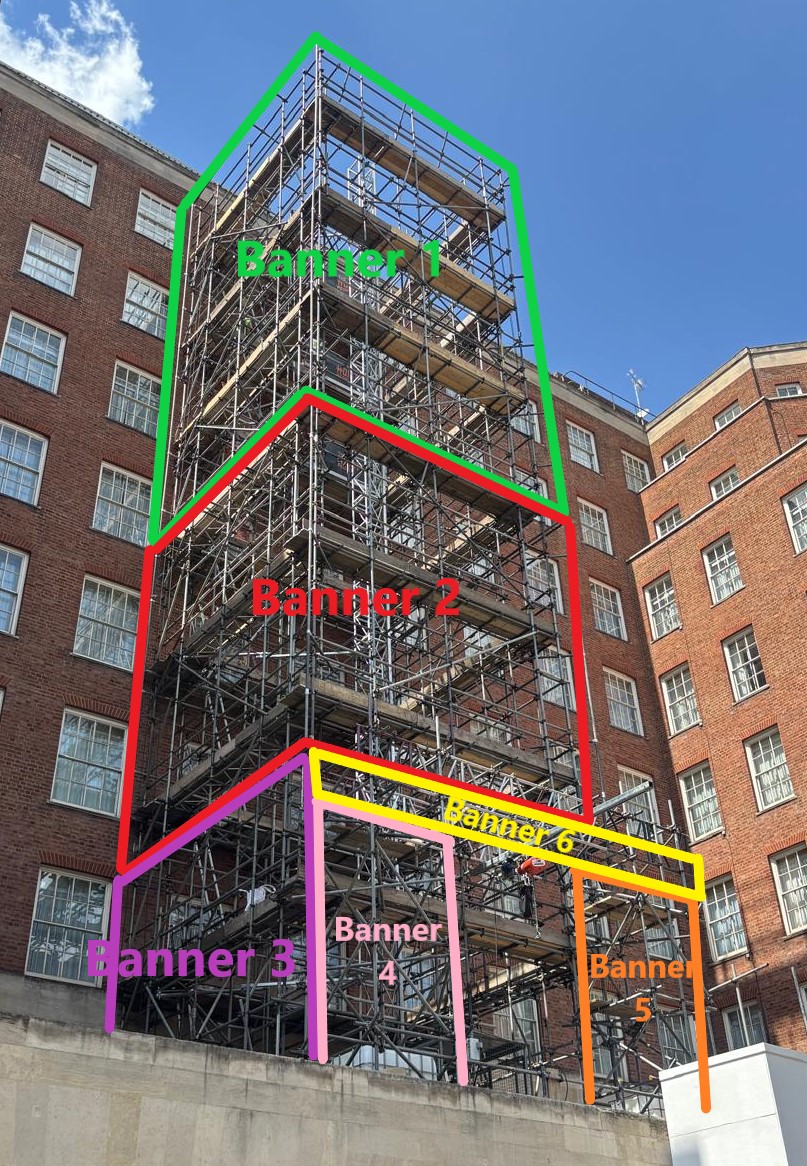
Our initial assessment identified six separate banner areas, each requiring careful consideration for dimensions, fixing points, access and how the individual sections would work together visually.
This approach allowed the wrap to follow the architecture and scaffold configuration much more effectively than trying to treat the entire structure as one continuous installation.
The result is a more controlled installation that can be managed in stages as the renovation progresses.
A wrap designed around the renovation programme
One of the key requirements of the project was that the scaffold wrap would not necessarily remain in place for the entire duration of the renovation.
The works are being completed progressively, floor by floor. As each section of the building is completed, the intention is to remove the corresponding part of the scaffold and wrap, starting from the top and working downwards.
This meant the printed solution had to be designed with the future dismantling programme in mind.
Rather than installing one large bespoke scaffold wrap that would have to be completely removed when access to a single floor was required, Project Print Management divided the installation into three main sections.
This gives the project team greater flexibility. As the renovation advances, individual sections can be struck without unnecessarily disturbing the remaining areas of the scaffold wrap.
For a busy London hotel where construction work has to continue alongside normal hotel operations, this type of forward planning is extremely important.
Concealing the hoist and construction activity
The main purpose of the wrap is to hide the hoist and temporary construction activity from view.
A hoist is an essential part of many large-scale renovation projects, allowing materials, equipment and other items to be moved efficiently between ground and upper levels. However, from outside the building, the hoist and associated scaffold can create a very industrial appearance.
At a high-profile hotel on Park Lane, maintaining the appearance of the building throughout the renovation is particularly important.
The scaffold wrap provides an effective visual screen, helping to conceal the working area while creating a much cleaner appearance externally.
This is especially valuable in a location where the building is surrounded by busy streets, neighbouring properties, visitors and hotel guests.
The objective was therefore not simply to cover the scaffold, but to produce an installation that looked deliberate, neat and professionally finished.
The importance of the sub frame for the bespoke scaffold wrap
One of the most important elements of the installation was the use of a purpose-built sub frame.
Printed scaffold mesh can look excellent when correctly installed, but achieving a clean finish around a complicated scaffold structure requires careful consideration of how the print is supported.
For this project, a sub frame was installed to provide a more controlled fixing surface for the printed material.
The sub frame helps keep the print tensioned, reducing unwanted movement and helping to maintain a consistent, professional appearance across the installation.
It also allowed the wrap to extend around the structure in a way that helped conceal the scaffold and fixing arrangement.
A major consideration was avoiding visible bungee fixings from the outside. Rather than allowing the fixing points to become an obvious feature of the installation, the design and construction of the sub frame enabled the printed material to wrap around the supporting structure.
This produces a much cleaner visual result.
The difference can be significant on a project of this scale. With a complex scaffold structure behind the print, poorly positioned fixing points can quickly become visible and distract from the overall appearance. The sub frame gave us much greater control over the finished installation.
Installation the bespoke scaffold wrap within strict working hours
Another major consideration was the fact that the hotel remains fully operational during the renovation.
This introduced additional logistical challenges for the installation team.
Work at an operational hotel requires careful coordination. Installation activity cannot simply take place whenever access is available, particularly in a busy central London location.
Project Print Management therefore had to work within strict working hours and coordinate the installation around the requirements of the hotel and the wider construction programme.
This meant planning access, installation activities, materials and working areas carefully to minimise disruption.
The photographs from the installation show the scale and complexity of the scaffold structure. Working within this environment requires the installation team to be aware of access routes, scaffold levels, surrounding building elements and the activities of other contractors.
Good preparation is therefore just as important as the physical installation itself.
A project requiring precision at every stage
Large-format scaffold wrapping is often assumed to be a relatively straightforward process: measure the scaffold, print the mesh and attach it to the structure.
In reality, projects such as this demonstrate why detailed planning is essential.
The building itself contains numerous architectural features, including windows, changes in elevation, stonework and projecting sections. The scaffold follows these changes, creating an equally complex temporary structure.
The wrap therefore has to work within the limitations of both the building and the scaffold.
The initial site photographs show the structure before the completed wrap, highlighting just how much temporary steel work was involved.
The annotated photograph also illustrates how the scaffold was divided into individual banner areas. This planning stage was important in establishing how the printed sections could be manufactured, installed and subsequently removed as the renovation moved forward.
Three-part installation for phased removal
The decision to install the wrap in three main parts was particularly important to the project.
The renovation programme means the upper sections of the scaffold are expected to be removed first as individual floors are completed. Designing the wrap around this sequence means that the printed material can be removed progressively rather than treating the entire installation as a single unit.
This has several advantages.
Firstly, it means the renovation programme can continue without the scaffold wrap becoming an obstacle.
Secondly, it reduces unnecessary disruption to sections of the building that are still undergoing work.
Finally, it provides a more economical and practical approach to managing the printed installation throughout the project.
The wrap is effectively designed to have a life cycle that mirrors the construction programme.
That kind of thinking is central to the way Project Print Management approaches large-format print projects. The print is only one part of the solution; understanding how it needs to perform throughout the life of the project is equally important.
Large-format print that works in the real world
For Project Print Management, projects like the Park Lane scaffold wrap demonstrate the wider role that large-format print can play within construction and renovation environments.
A printed scaffold wrap can provide much more than simple branding or decoration. It can help screen construction activity, improve the appearance of a building during renovation, create a more controlled environment visually and provide a professional finish while major works are taking place.
However, the success of the project depends on the installation method as much as the printed graphic.
In this case, the combination of carefully planned banner sections, a supporting sub frame and a wrapping detail around the scaffold enabled us to achieve the required finish while allowing for the future removal of the sections.
Managing a complex London installation
Working in central London brings its own challenges, from restricted access and busy surroundings to the need for careful coordination with other contractors.
Adding an operational hotel and a live renovation programme to that environment makes the planning even more important.
Every stage of the project had to be considered with the hotel continuing to operate around the construction works.
Project Print Management worked with the project requirements to provide a solution that could be installed efficiently, remain tensioned and visually presentable, and ultimately be removed in stages as the renovation progresses.
The photographs provide a good insight into the scale of the scaffold and the complexity involved before the finished wrap is installed.
Another bespoke scaffold wrap by Project Print Management
The Grosvenor Hotel project is a strong example of how Project Print Management approaches large-format scaffold wrap projects from a practical and technical perspective.
From the initial site assessment and planning of the individual banner areas through to the installation of the sub frame and printed material, every element was considered around the needs of the renovation programme.
The decision to divide the installation into three sections means the wrap can evolve alongside the building works, with the intention of striking from the top down as each floor is completed.
At the same time, the sub frame provides the necessary support to keep the print tensioned and enables the material to wrap around the structure, helping to hide the bungee fixings and create a cleaner finished appearance.
Most importantly, the finished installation helps conceal the hoist and temporary construction works while the hotel remains operational.
For Project Print Management, this project demonstrates exactly what bespoke large-format print is about: taking a challenging site, understanding the practical requirements and developing a printed solution that works not only visually, but throughout the entire construction process.
Whether the requirement is a full scaffold wrap, a temporary construction screen, building wrap or another large-format installation, careful planning and installation are essential to achieving the right result.
The Park Lane project is another example of Project Print Management delivering a tailored scaffold wrap solution for a demanding London renovation environment.
For more print projects of bespoke scaffold wrap visit our blog page or contact us for more information.