An ambitious landmark installation for a major filmmaker
Some projects push the boundaries of creativity. Others push the boundaries of engineering. This project for a Water Tower scaffold wrap demanded both.
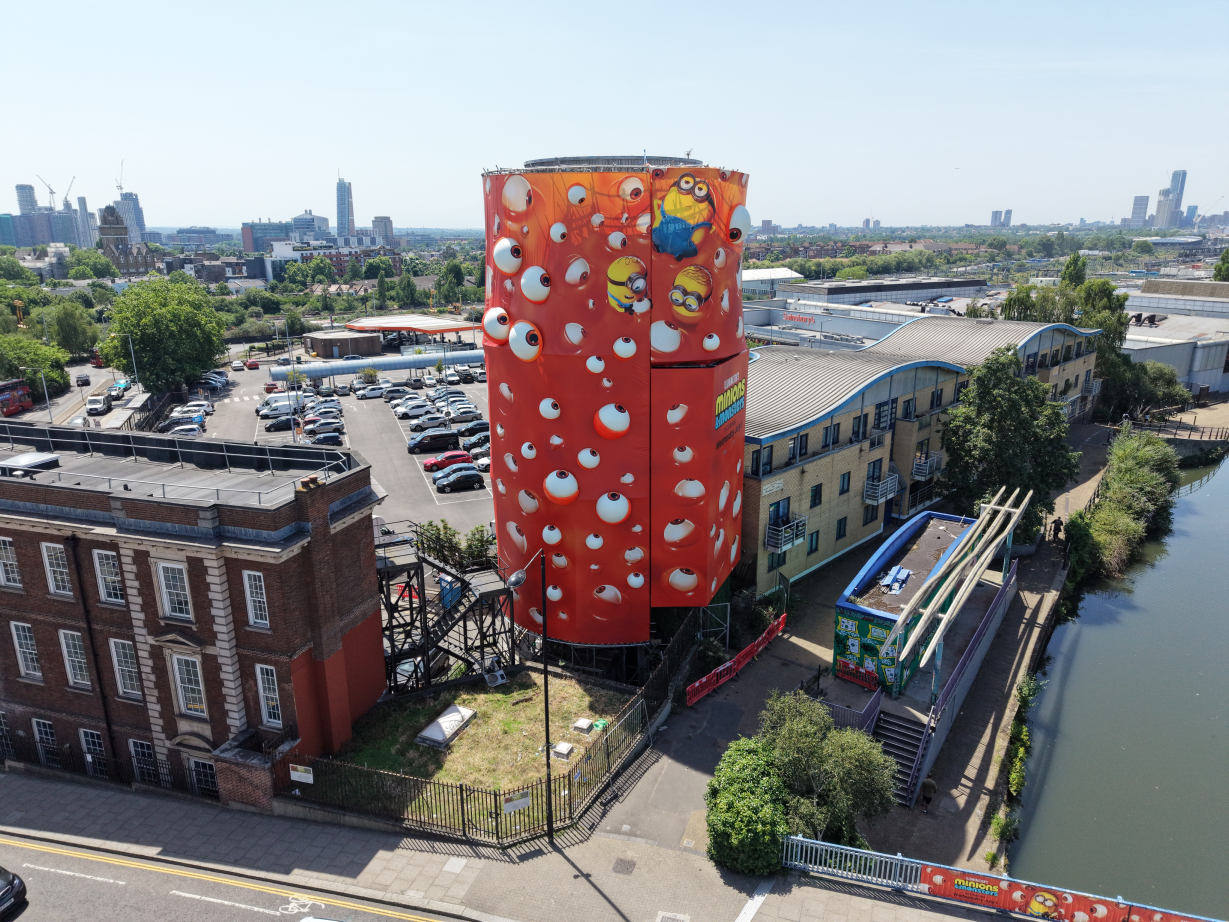
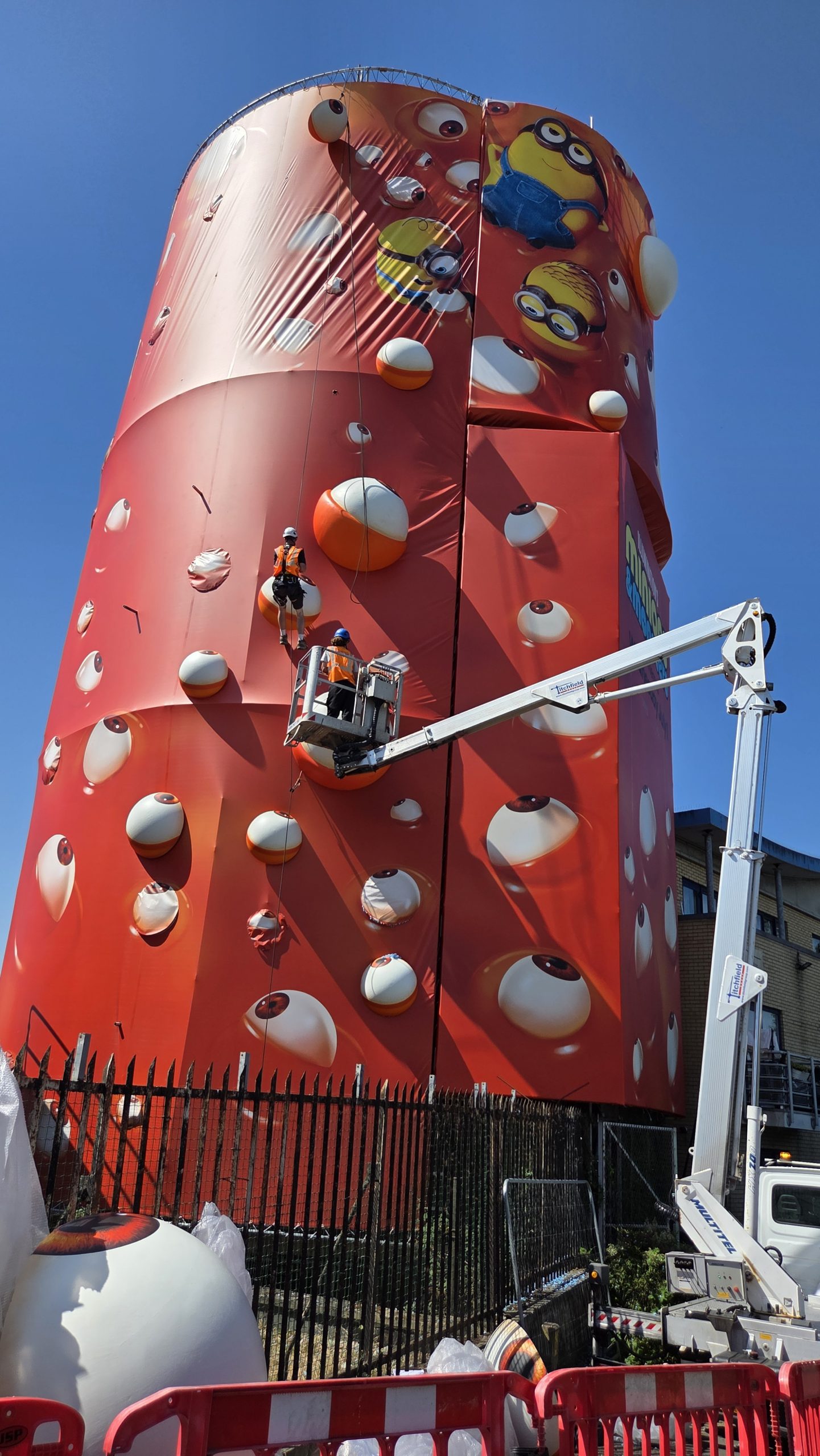
PPM was commissioned by a major filmmaker to transform a century-old water tower in Ladbroke Grove, London, into an enormous monster as the centrepiece of a national film marketing campaign. The creative concept was bold: completely wrap the cylindrical tower in vibrant digitally printed graphics before adding a series of oversized three-dimensional eyes to create the illusion that the building itself had become a living character.
While visually playful, the project quickly became one of the most technically challenging installations PPM has ever delivered. Every aspect of the project—from structural engineering and scaffold design through to large-format print production, installation logistics and stakeholder management—required bespoke solutions.
The finished installation transformed one of London’s most recognisable industrial landmarks into a spectacular piece of experiential advertising, but behind the colourful graphics lay months of engineering, planning and problem-solving.
Understanding the Structure
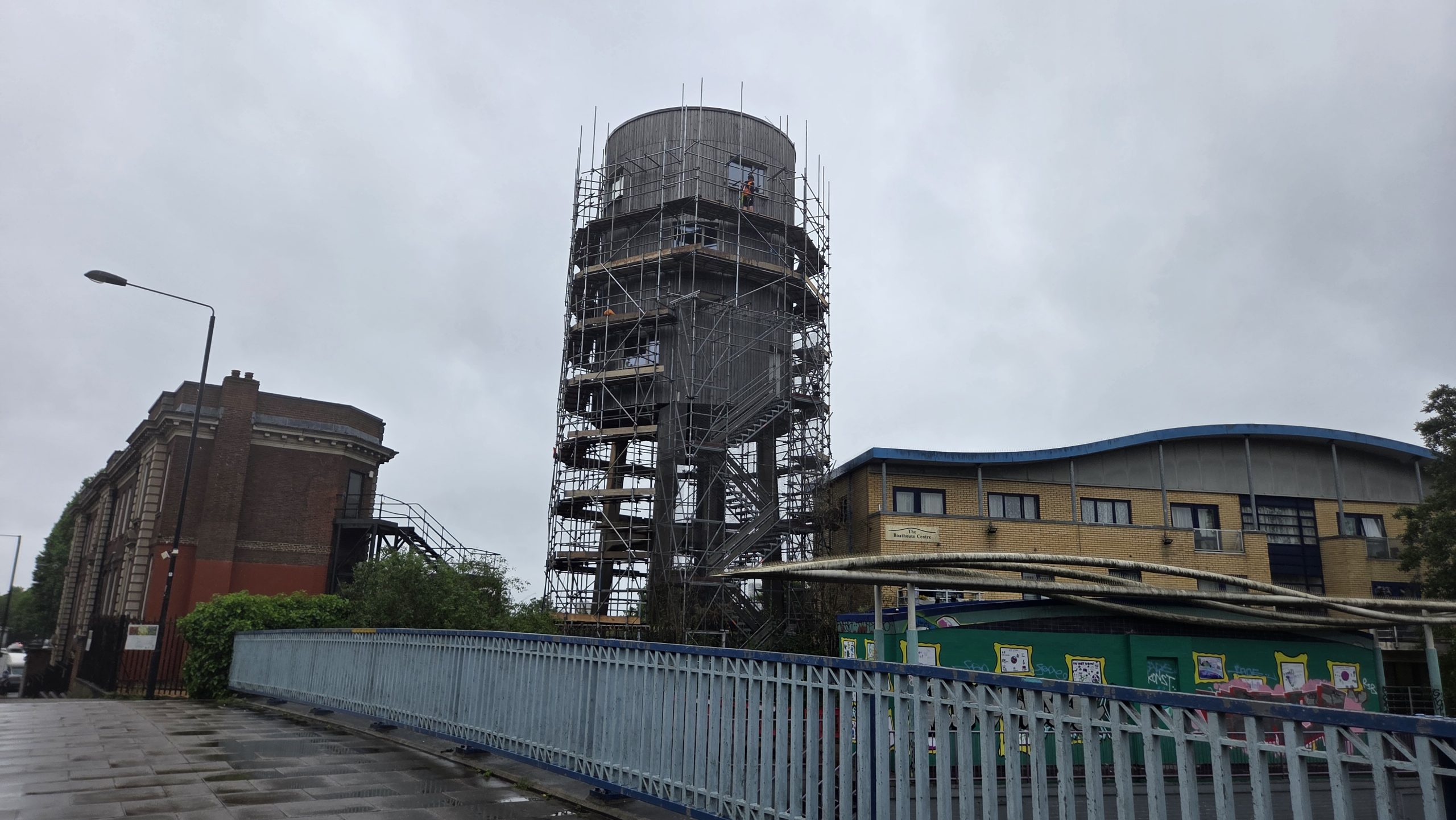
The Water Tower scaffold wrap presented an unusual combination of historic and contemporary construction.
Originally built over 100 years ago, the lower section comprised the original reinforced concrete water tank. During its conversion into a residential property, two additional floors had been constructed above using a curved timber cassette system finished with insulated rainscreen cladding.
Although visually impressive, this presented significant engineering challenges.
The tower measured over 25 metres in height with a circumference of around 38 metres. The printed wrap alone covered over 760 square metres, weighing more than 420 kilograms, before the addition of twenty oversized three-dimensional eyes, the largest measuring 1.8 metres in diameter.
Unlike a conventional commercial building, there were very few locations capable of accepting structural fixings, meaning every element of the temporary works required careful investigation.
The Initial Engineering Challenge for the water tower scaffold wrap
The original proposal involved erecting a conventional tube-and-fitting scaffold around the upper section of the tower to support the printed graphics.
Following detailed structural analysis, PPM’s consulting engineers rejected the concept.
The tower occupies an exposed position alongside the Grand Union Canal where prevailing winds are funnelled along the waterway before striking the circular structure. Combined with the age of the building, its residential conversion and the required structural safety factor of 5.1, the proposed scaffold could not safely withstand the predicted wind loads.
Rather than compromise the creative vision, the engineering team completely redesigned the temporary works.
The revised solution involved constructing a fully independent scaffold surrounding the entire tower from ground level to roof height.
This provided the necessary rigidity but introduced another significant challenge.
To achieve certification, the scaffold required 42 structural ties into the building.
Finding a Structural Fixing Solution for the Water Tower scaffold wrap
Designing the scaffold was only the beginning.
The structural ties themselves required pull-out loads of approximately 8.7kN at the lower levels and 3.5kN higher up the structure.
Unfortunately, the external wall build-up consisted primarily of rainscreen cladding and insulation. Conventional anchor bolts would never achieve the required structural performance.
Rather than redesign the project yet again, PPM began working with the original German manufacturer of the curved timber cassette system.
By studying the manufacturing drawings in detail, the engineering team discovered a hidden structural solution.
Each timber cassette incorporated a 40mm plywood threshold at both its top and bottom, running continuously around the circumference of every floor.
This created an 80mm-high structural fixing zone capable of resisting the required loads.
With three levels of timber cassettes, four continuous fixing bands became available around the building.
Although these represented only a tiny proportion of the overall structure, they provided sufficient structural capacity to safely support the scaffold.
Even more remarkably, the external cladding featured a discreet 10mm expansion joint positioned directly over these plywood thresholds, allowing carefully located fixings to penetrate the structure with minimal visual impact.
Water tower scaffold wrap Designing for the Worst Weather
One of the most important aspects of the project was ensuring that the temporary structure could safely withstand whatever the British weather might deliver.
Large-scale temporary installations cannot simply be designed for favourable weather conditions—they must remain safe throughout their entire installation period, regardless of changing forecasts.
The water tower’s exposed location beside the canal significantly increased wind pressures on both the scaffold and the printed wrap. Every component of the installation, from the scaffold structure and building ties to the secondary framework and graphics, was therefore engineered to resist extreme wind loading.
This emphasis on engineering proved particularly significant during the installation programme.
While work was underway, the UK came close to being affected by a major Atlantic storm system. Although the storm ultimately tracked away from London, it served as a powerful reminder of why temporary structures must always be designed for the worst credible weather conditions rather than the forecast on any given day. www.bbc.co.uk/news/articles/cjwgynnwyw2o
The engineering calculations ensured that the complete installation could safely withstand severe weather throughout the campaign, providing confidence to the property owner, project stakeholders and installation team alike.
Creating the Graphic System for the Water Tower scaffold wrap
Once the scaffold had been certified and erected, attention turned to installing the enormous printed skin.
Rather than fixing the graphics directly onto the scaffold tubes, PPM designed and fabricated a bespoke secondary framework using Kee Klamp tube connectors.
The system created a smooth circular profile around the tower while concealing all fixings behind the graphics themselves.
The printed wrap was tensioned using an extensive network of elastic bungee fixings.
This seemingly simple detail formed an important part of the engineering strategy.
Rather than behaving as a rigid sail, the graphics were able to move slightly in high winds, significantly reducing the loads transferred into the scaffold while maintaining a perfectly tensioned appearance.
The result was a seamless graphic installation that appeared to wrap effortlessly around the tower despite its considerable scale.
Installation Under Pressure
As with many live marketing campaigns, the installation programme was extremely tight.
The unveiling date had been fixed well in advance, with the film’s director scheduled to visit the completed installation for media photography.
However, on the planned installation day, wind speeds exceeded the safe operating limits for lifting and tensioning more than 760 square metres of printed material.
Safety came first.
The installation had to be postponed, immediately placing the programme a full day behind schedule.
Once weather conditions improved, the PPM installation team successfully recovered lost time and completed the wrap within the revised programme without compromising quality or safety.
Bringing the Monster to Life on a water tower scaffold wrap
With the graphics complete for the Water Tower scaffold wrap, attention turned to the installation’s defining feature.
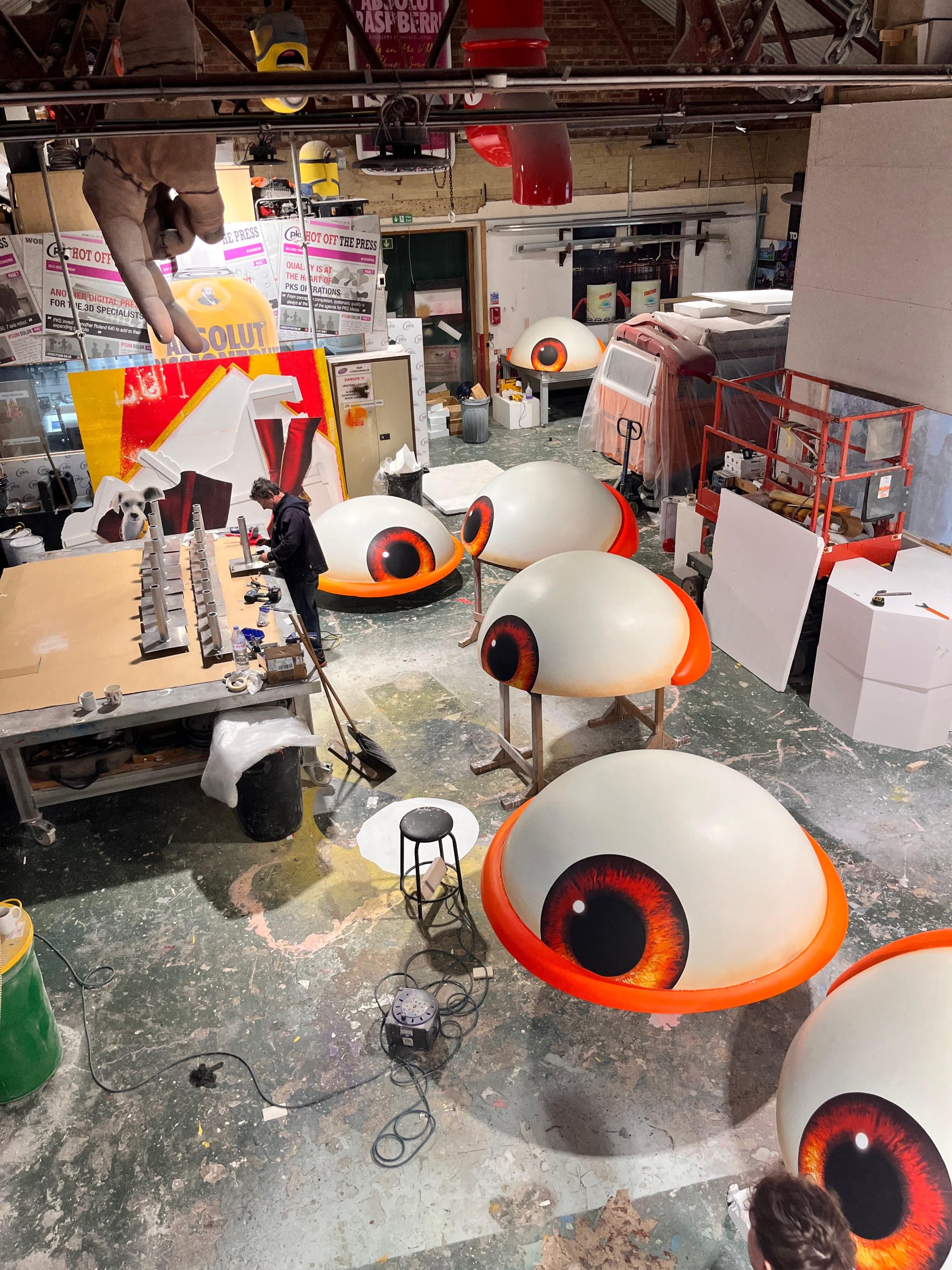
Twenty oversized three-dimensional monster eyes were manufactured from high-density foam using CNC robotic machining before being coated and wrapped with specially printed self-adhesive vinyl.
The largest eye measured approximately 1,800mm in diameter and weighed up to 40 kilograms.
Installing these elements required a carefully coordinated combination of mobile elevated work platforms, scaffold access and specialist rope access technicians.
Each eye had to be positioned precisely to align with the printed graphics while remaining securely fixed to the scaffold structure.
These three-dimensional features transformed the installation from a conventional building wrap into a truly immersive piece of environmental branding.
Coordinating Multiple Stakeholders
Projects of this complexity depend on far more than engineering expertise.
Throughout the programme, PPM coordinated an extensive team including the building freeholder, renowned designer Tom Dixon, the project’s architects, structural engineers, scaffold designers, specialist contractors, the filmmaker’s creative agency, print production teams and installation crews.
Every engineering revision influenced programme, fabrication and installation sequencing.
Every design decision required balancing structural integrity, property protection, visual impact and construction practicality.
Acting as principal project manager, PPM ensured all parties remained aligned while maintaining programme, safety and quality throughout the project.
The Finished Result for the Water Tower scaffold wrap
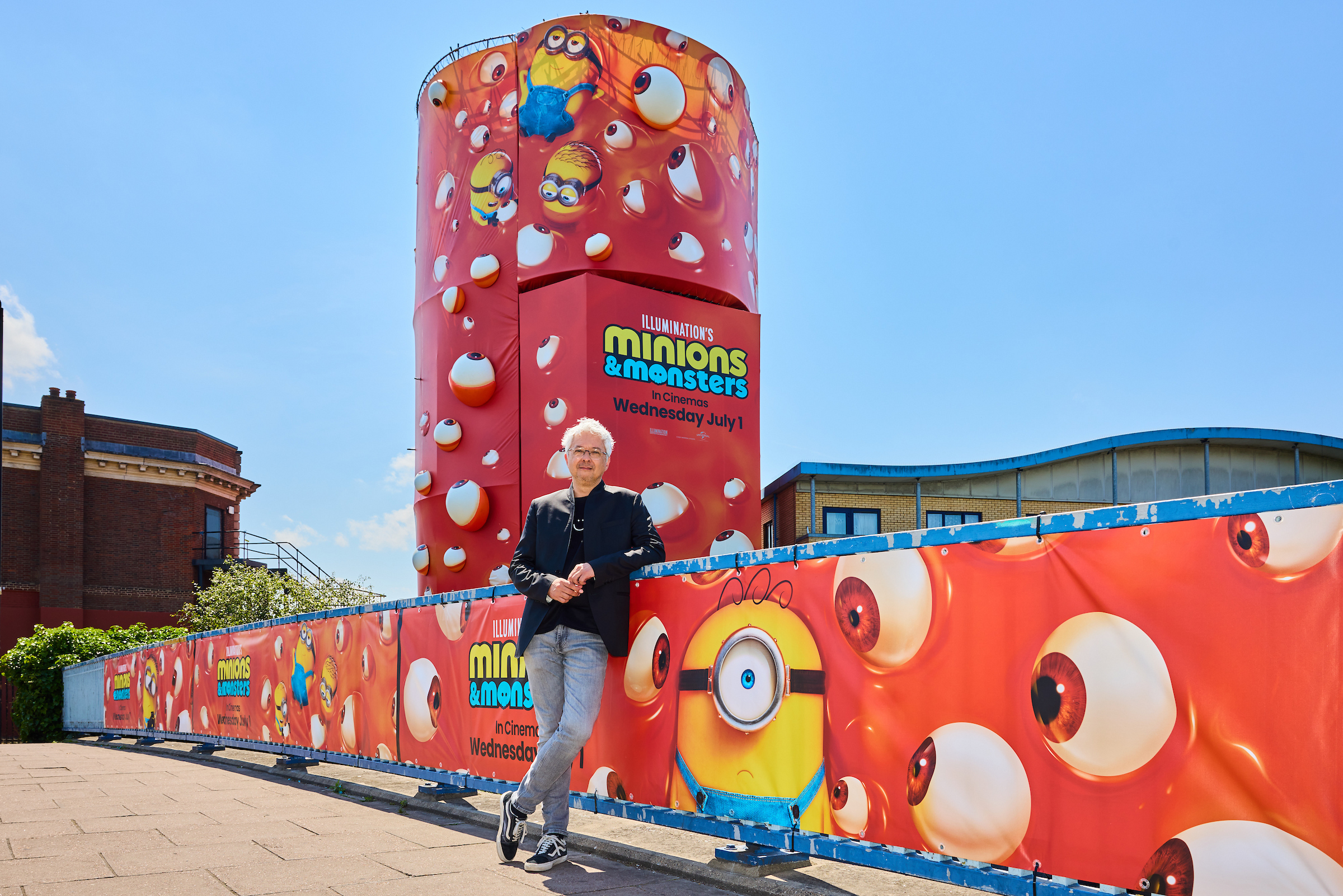
The completed installation transformed the historic water tower into an unforgettable giant monster overlooking Ladbroke Grove.
Visible from surrounding roads, rail routes and neighbouring developments, the structure immediately became a local landmark, attracting widespread public attention and delivering a highly memorable campaign activation.
Despite the enormous scale of the installation, the engineering remained almost entirely invisible.
Hidden fixings, seamless graphic joints, carefully tensioned materials and precisely positioned three-dimensional elements created the illusion that the tower itself had become a character from the film.
Few people viewing the installation would appreciate the months of structural analysis, engineering design and technical innovation hidden beneath the playful exterior.
Water Tower Scaffold Wrap Project Highlights
- Transformation of a 100-year-old converted water tower
- Approximately 25 metres high with a 38-metre circumference
- Over 760m² of digitally printed graphics
- More than 420kg of printed material installed
- Fully engineered scaffold designed for extreme wind loading
- 42 structural scaffold ties into the existing building
- Bespoke fixing solution developed from original German construction drawings
- Secondary Kee Klamp framework for seamless graphic installation
- Twenty CNC-machined three-dimensional monster eyes
- Largest eye measuring 1.8 metres in diameter
- Complex coordination across architects, engineers, contractors, property owners and creative stakeholders
The Minions & Monsters water tower project stands as one of PPM’s most technically demanding and creatively rewarding installations.
What began as an ambitious creative concept evolved into a highly sophisticated engineering exercise, requiring bespoke scaffold design, structural investigation, innovative fixing solutions and meticulous project management.
Every challenge—from extreme wind loading and hidden structural limitations to compressed installation schedules and complex stakeholder coordination—was overcome through careful planning, collaboration and technical expertise.
While the finished installation appeared playful and effortless, the engineering behind it was anything but. Every fixing point, scaffold tie, wind calculation and structural detail had to be meticulously designed to transform a historic water tower into a giant monster safely.
The project perfectly demonstrates PPM’s ability to combine engineering excellence with creative ambition, delivering landmark installations that are as technically impressive as they are visually unforgettable. Fore more information on building wraps or scaffold wraps please contact us.