Large Format Digital Print: Which Printing Method Is Best?
Large format digital printing has developed considerably over the last few years, giving businesses a wider choice of print technologies, materials and finishes than ever before.
At Project Print Management, we are often asked: which large format printing method is best?
There is no single answer. The right printing process depends on the application, material, required lifespan, location, finish and budget. A building wrap exposed to the British weather has very different requirements from an exhibition backdrop, retail display or fabric graphic.
Below, we look at four of the main large format digital printing methods used today and explain where each technology performs best.
Dye-Sublimation Fabric large format Digital Print
Dye-sublimation is one of the best printing processes for producing high-quality fabric graphics, particularly when polyester materials are being used.
With transfer dye-sublimation, the image is first digitally printed onto specialist transfer paper using sublimation inks. The printed paper and polyester fabric are then passed through a calendar heat press at high temperature.
The heat causes the dye to convert into a gas and penetrate the polyester fibres. As the material cools, the colour becomes permanently embedded within the fabric rather than simply sitting on its surface.
Modern systems can also print directly onto suitable polyester fabrics before heat fixation. Current production equipment includes machines capable of printing textiles more than 3 metres wide, making the technology suitable for extremely large displays and soft signage.
The result is a vibrant, durable graphic with excellent colour reproduction. Because the print becomes part of the material, dye-sublimated fabrics can also be folded and transported without the cracking sometimes associated with coated materials.
Typical applications include:
-
Exhibition backdrops
-
Flags and fabric banners
-
Backlit displays
-
Retail graphics
-
Event branding
-
Soft signage
-
Interior décor
-
Sportswear and promotional clothing
Dye-sublimation is particularly useful when a lightweight, premium-looking graphic is required.
Solvent and Eco-Solvent Large Format Printing
Solvent and eco-solvent printing have been widely used throughout the signage industry for many years and remain important technologies today.
Modern eco-solvent printers are particularly suitable for self-adhesive vinyl, banners and signage. In fact, manufacturers continue to develop current eco-solvent printer ranges, so it would be incorrect to describe the technology as obsolete.
The ink bonds well to suitable outdoor media and can provide excellent colour and weather resistance.
This makes solvent and eco-solvent printing suitable for applications such as:
-
Vehicle graphics and wraps
-
Outdoor signage
-
Self-adhesive vinyl
-
PVC banners
-
Window graphics
-
Promotional displays
-
Construction graphics
Traditional solvent printing can require ventilation and a period for the print to fully dry or out gas before lamination. Modern eco-solvent systems have improved considerably, but requirements depend on the particular ink, media and finishing process being used.
For high-quality outdoor graphics, it remains a proven and versatile production method.
UV and UV LED Digital Printing
UV printing has become one of the most versatile technologies within large format digital printing.
Instead of waiting for conventional ink to dry through evaporation, UV inks are cured rapidly using ultraviolet light. Modern large-format machines increasingly use energy-efficient LED curing systems.
One of the main advantages is the enormous range of materials that can be printed.
Depending on the equipment, UV technology can print directly onto rigid materials including:
-
Aluminium composite panels
-
Acrylic
-
Foamex and foam board
-
Glass
-
Wood
-
Corrugated board
It can also be used with flexible materials such as banners and display media.
Modern hybrid UV LED machines can switch between rigid boards and roll-fed materials, while current production machines can offer print widths exceeding 3 metres. White ink can also be used for printing onto transparent or coloured materials and for specialist multilayered applications.
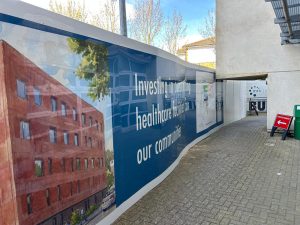
For Project Print Management, this type of technology is particularly relevant to applications such as printed construction hoarding, display panels, retail graphics and other large-format signage.
Latex large format Digital Print
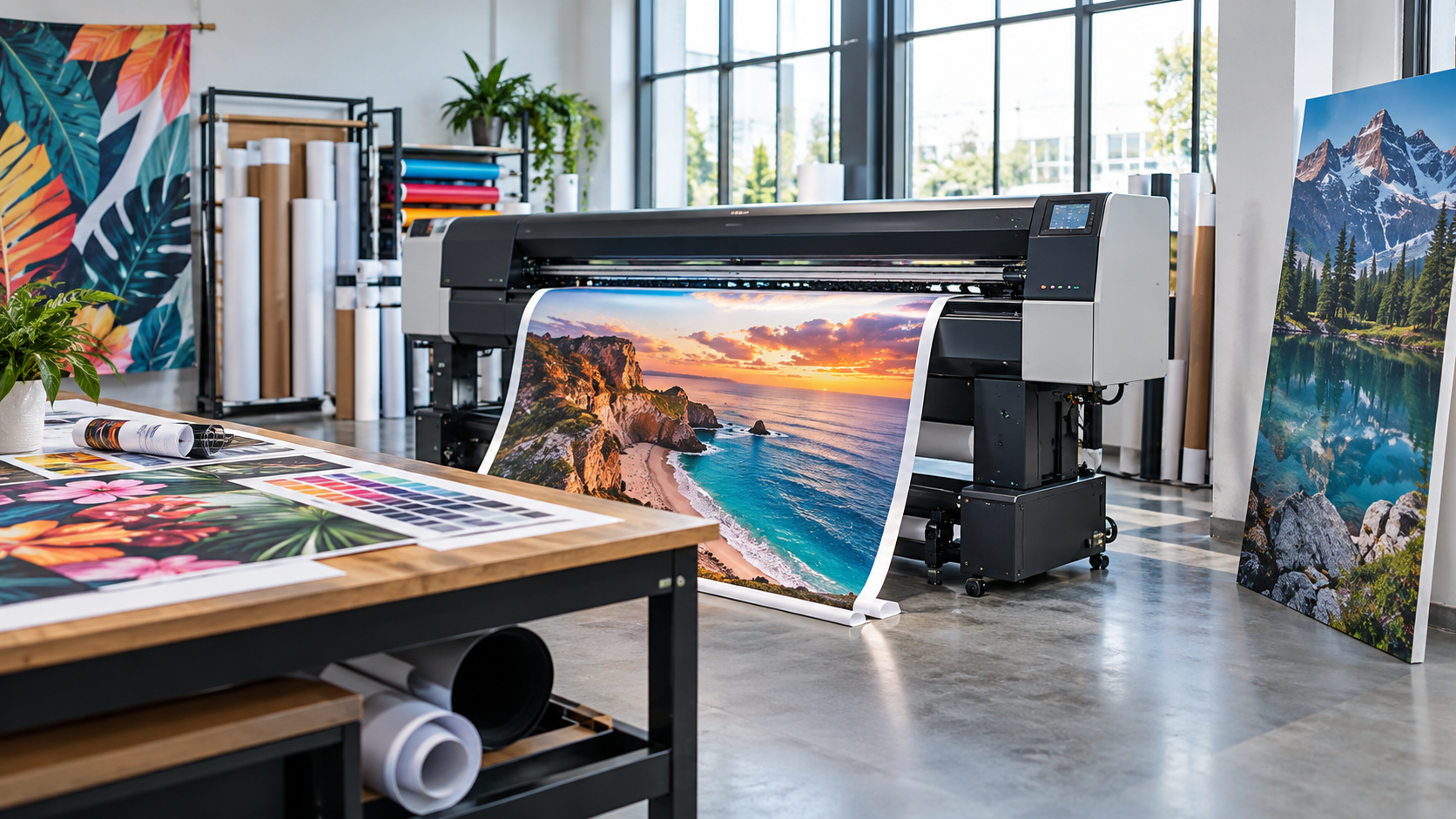
Latex printing has also become a major technology within the large-format graphics market.
Modern HP Latex systems use predominantly water-based ink formulations containing pigments and polymers. Heat and airflow remove the liquid carrier and create a durable printed image. Current machines can handle applications ranging from banners and self-adhesive vinyl to textiles and even rigid boards on certain models.
One of the significant production advantages is that prints come off the machine ready for finishing without the traditional out gassing period associated with some solvent printing processes.
Latex is therefore particularly useful when fast turnaround is important.
Typical applications include:
-
Vehicle graphics
-
Wall coverings
-
Exhibition graphics
-
Retail displays
-
Window graphics
-
Banners
-
Interior graphics
-
Self-adhesive vinyl
Modern HP Latex inks also carry certifications relating to indoor air quality and low emissions, which can make them particularly useful for graphics intended for interior environments such as shops, offices, schools and hospitals.
Which large format Digital Print Method Should You Choose?
The best printing technology should always be selected according to the finished application rather than simply choosing the machine with the highest advertised resolution.
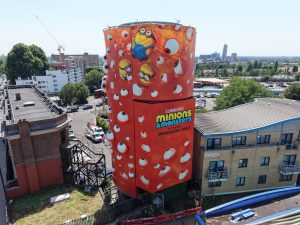
For a fabric exhibition backdrop, dye-sublimation may provide the best result. For printed construction hoarding, UV printing directly onto aluminium composite material may be ideal. Vehicle graphics can be produced using latex or eco-solvent technology, while extremely large building wraps and scaffold banners require careful consideration of the print process, material, finishing and installation method.
Resolution is also only one part of print quality. Viewing distance, colour management, substrate, artwork quality and the number of print passes can all influence the finished result.
At Project Print Management, we assess the complete project before recommending the most appropriate print specification. This includes the location, size, expected lifespan, viewing distance, fire-rating requirements, installation method and environmental considerations.
For large-format projects including building wraps, scaffold wraps, printed hoarding, banners and specialist graphics, selecting the correct combination of printing technology and material is essential to achieving a professional and durable result.
For our more information please contact us or for our latest work please visit our blog page.