
Sports Signage: Sport has a unique ability to bring people together. From global tournaments watched by millions to local school matches supported by families and communities, sporting environments create moments of excitement, loyalty, and shared experience. Within these environments, sports signage plays a crucial role—not only as a practical tool, but also as a powerful medium for advertising, branding, and communication.
At Project Print Management, we understand how effective signage can elevate sporting spaces, support sponsors, and enhance the overall experience for players, spectators, and organisers alike. This blog explores the many forms of sports signage, the materials and technologies behind it, and why it remains such an essential component of sporting events at every level.
Why Sports Signage Matters
Sporting venues are dynamic, fast-moving environments. Crowds are large, attention is high, and emotions are engaged. This makes sport one of the most valuable platforms for brand exposure. Signage within these spaces serves multiple purposes at once:
-
Promoting sponsors and commercial partners
-
Reinforcing team or event branding
-
Guiding spectators around venues
-
Enhancing the atmosphere and professionalism of the event
-
Providing information, safety messaging, and wayfinding
When designed and positioned correctly, sports signage becomes part of the spectacle. It blends seamlessly into the environment while still delivering strong visual impact—both in person and through broadcast media.
Versatility Across All Sporting Environments
One of the key strengths of sports signage is its adaptability. It can be tailored to suit almost any sport, venue, or scale of event. While large stadiums often feature expansive digital displays and perimeter boards, smaller venues rely just as heavily on banners, sponsor boards, and directional signage.
From professional football grounds and international tournaments to school sports days and community fundraisers, signage plays a vital role in shaping the event experience. The same principles apply regardless of scale: clear messaging, strong visuals, and durable materials.
Importantly, signage is not limited to competitive play areas. It extends to car parks, entrances, walkways, hospitality areas, training facilities, and temporary event spaces.
Common Types of Sports Signage: Billboards and Hoardings
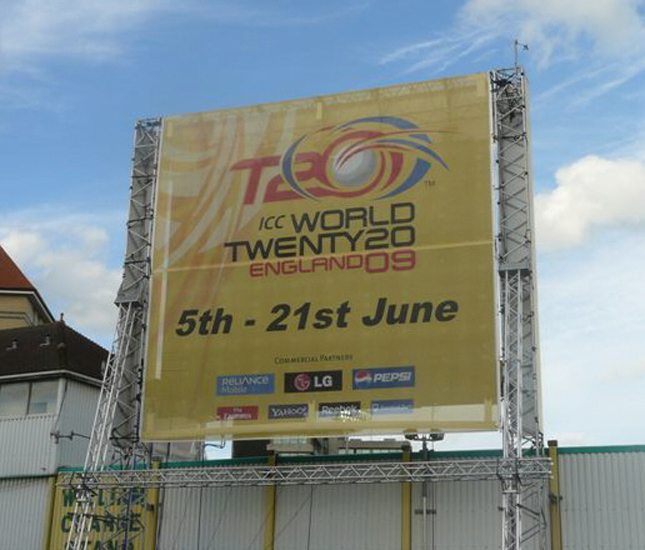
Billboards and hoardings remain a cornerstone of sports advertising. Positioned around stadium perimeters, along approach roads, or adjacent to playing fields, they offer large-format visibility that is difficult to ignore.
These structures are ideal for sponsor promotion, event announcements, or long-term brand messaging. Constructed using durable materials such as aluminium composite panels, PVC banners, or mesh, they are designed to withstand weather exposure while maintaining print quality.
In some cases, hoardings also serve a dual purpose by screening unattractive areas or construction zones while delivering valuable advertising space.
Pitch-Side and Perimeter Signage
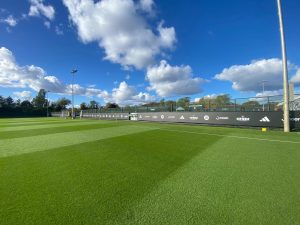
Pitch-side signage is one of the most recognisable forms of sports branding. These boards are positioned along the edges of playing areas to ensure maximum exposure to spectators and broadcast cameras.
Corner post branding, foam bolsters, and sideline boards are particularly popular in sports such as football, rugby, and hockey. These elements are designed with safety in mind, using soft materials that meet sporting regulations while still providing a highly visible branding surface.
Triangular foam bolsters and retractable corner posts allow sponsors to achieve strong exposure without interfering with play.
Banners and Sponsor Boards
Banners are among the most flexible signage solutions available. They can be printed on PVC, mesh, fabric, or canvas, depending on whether the application is indoor or outdoor.
Sponsor boards are often installed at entrances, behind interview areas, or along spectator zones. These boards provide a clean, professional backdrop for photography, media coverage, and sponsor recognition.
Because banners are lightweight and portable, they are particularly popular for tournaments, touring events, and temporary venues.
Digital Signage
Digital signage has become increasingly prominent in modern sports venues. LED screens and digital display boards allow for dynamic content such as rotating sponsor logos, live scores, countdowns, and animated graphics.
One of the biggest advantages of digital signage is flexibility. Content can be updated instantly, allowing event organisers to adapt messaging throughout the day. This is especially valuable for televised events, where exposure can be carefully timed for maximum impact.
Digital signage is often supported by printed structures or frames that ensure stability, protection, and a professional finish.
Pavement Graphics and Wayfinding
Sports signage isn’t limited to eye-level displays. Floor and pavement graphics are increasingly used to guide crowds, highlight entrances, and reinforce branding throughout a venue.
These graphics are printed on specialist non-slip materials designed to withstand heavy foot traffic. They are particularly effective in stadium concourses, fan zones, and event entrances where large numbers of people pass through in a short time.
Wayfinding signage improves crowd flow, reduces confusion, and contributes to a smoother event experience.
Promotional and Support Items
In addition to fixed signage, many sporting events use promotional items to extend brand visibility. Flags, branded barriers, pop-up displays, and temporary structures all contribute to the visual landscape of an event.
Merchandise such as caps, banners, and branded backdrops further reinforce sponsor presence while creating memorable touch points for fans.
Materials Used in Sports Signage
Choosing the right material is essential for both performance and longevity. Sports signage must withstand physical impact, weather exposure, and frequent handling—often over short but intense periods of use.
Commonly used materials include:
-
PVC and Mesh Vinyl – Ideal for banners and large-format signage. Mesh allows wind to pass through, reducing strain in outdoor environments.
-
Corex (Correx) – Lightweight and cost-effective, commonly used for temporary signage and directional boards.
-
Aluminium Composite (Dibond) – Durable and rigid, suitable for permanent or semi-permanent installations.
-
Acrylic – Provides a premium finish, often used for sponsor boards and interior signage.
-
Foam – Used for safety-critical elements such as goalpost pads and corner posts.
-
Fabric and Canvas – Lightweight and flexible, ideal for portable banners and indoor use.
Selecting the correct substrate ensures the signage performs as intended while maintaining visual quality throughout the event.
The Importance of High-Quality Printing
No matter how well designed a sign is, poor print quality will undermine its impact. High-resolution printing ensures that colours are vibrant, text is sharp, and imagery is clear from both close-up and distance.
At Project Print Management, we use advanced digital printing technologies and premium inks to produce signage that performs under demanding conditions. This is particularly important for outdoor sports environments, where UV exposure, rain, and temperature changes can quickly degrade inferior prints.
Consistent print quality is also essential for sponsor confidence. Brands expect their logos and messaging to be represented accurately, especially when signage is captured on camera and shared widely across media platforms.
Sports Signage at Every Level of Play

While elite sports attract the most attention, signage is just as valuable at grassroots and community levels. Local clubs, schools, and amateur leagues benefit significantly from well-designed signage that enhances professionalism and engagement.
For schools and youth sports, signage can boost morale, create a sense of occasion, and encourage greater community involvement. Sponsor support is often easier to secure when signage opportunities are available, helping clubs fund equipment, facilities, and development programmes.
Even small-scale events benefit from clear signage that improves organisation, safety, and spectator enjoyment.
Branding, Sponsorship, and Return on Investment
From a commercial perspective, sports signage offers excellent return on investment. Unlike many forms of advertising, signage is embedded directly into the event environment, ensuring repeated exposure throughout the duration of play.
Sponsors benefit from association with teams and events that audiences care about deeply. Signage reinforces this connection visually, strengthening brand recall and emotional engagement.
For event organisers, signage provides an opportunity to monetise space while improving the overall presentation of the venue.
End-to-End Sports Signage Solutions
At Project Print Management, we specialise in the design, production, and installation of bespoke sports signage solutions. We work closely with clients to understand their objectives, venue constraints, and audience needs.
Our services cover everything from one-off banners to complete signage packages for large-scale events. By managing the process from concept through to installation, we ensure consistency, quality, and reliability at every stage.
Sports signage is far more than decoration. It is a powerful communication tool that enhances branding, supports sponsors, improves wayfinding, and elevates the overall experience of sporting events.
From professional stadiums to local playing fields, effective signage brings structure, atmosphere, and commercial value to sport. With the right materials, design, and printing expertise, signage becomes an integral part of the action rather than a background element.
At Project Print Management, we are proud to support sporting events of all sizes with high-quality, customised signage solutions. Whether you are planning a major tournament or a local competition, our team is ready to help you make a lasting visual impact.

For more information on our latest print projects please visit our blog or contact us.