A First for Project Print Management: The Opportunity to Scaffold Wrap London Iconic Ladbroke Grove Water Tower
In the world of large-format print, outdoor advertising and construction branding, there are projects that challenge convention and projects that create entirely new opportunities for scaffold wraps London.
For Project Print Management (PPM), the Ladbroke Grove Water Tower in West London represents both.
Over the years, we have delivered scaffold wraps, building wraps, construction graphics and large-format branding solutions across a wide range of commercial, residential and regeneration projects. However, one thing we had never encountered before was the opportunity to install a scaffold wrap on a historic water tower.
That changed when we became involved with one of London’s most unusual residential properties: the iconic Ladbroke Grove Water Tower.
Standing proudly above the Grand Union Canal near Ladbroke Grove, this remarkable structure has undergone one of the capital’s most celebrated architectural transformations. Once a functional piece of industrial infrastructure, it is now an award-winning home and a recognised landmark on the West London skyline.
For Project Print Management, the possibility of transforming the surrounding scaffold into a high-impact advertising and branding platform marks a genuine first for our business.
A Forgotten Piece of London’s Industrial Heritage
Long before it became an architectural talking point, the Ladbroke Grove Water Tower served a very practical purpose.
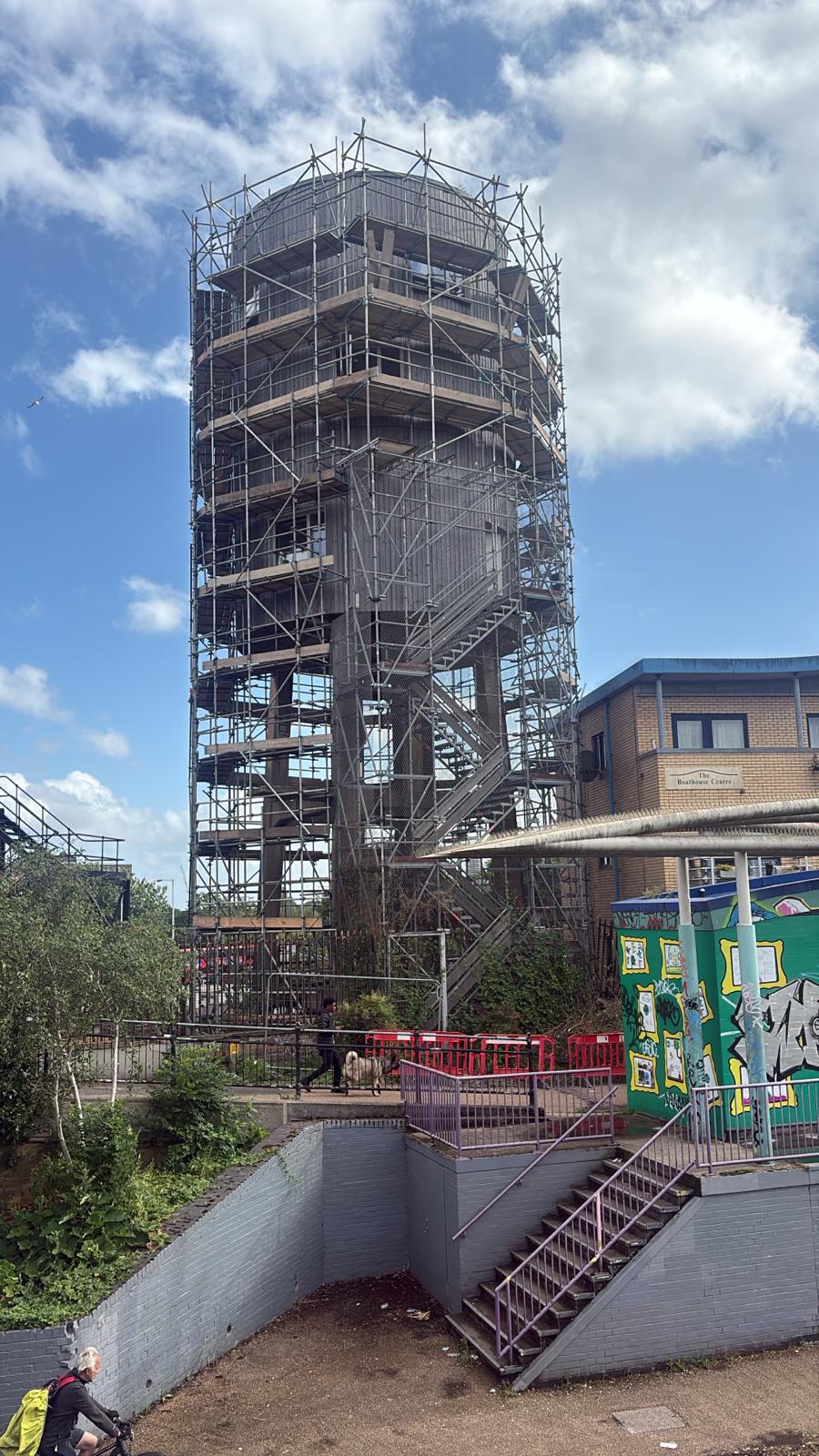
Constructed during the 1930s, the 60-foot-high tower was built to store approximately 5,000 gallons of emergency water for a nearby gasworks. At the time, the surrounding area was heavily industrialised, with canals, railway infrastructure and gas production facilities playing a vital role in London’s economy.
The tower acted as a precautionary safety measure, ensuring an immediate water supply was available in the event of a fire or explosion at the adjacent gas structure.
While it was never designed to be beautiful, its robust steel construction and elevated form created a distinctive presence that would become increasingly recognisable over the decades.
As industrial operations declined and infrastructure modernised, the tower eventually became obsolete. For many years it stood unused, a rusting industrial relic overlooking the northern end of Ladbroke Grove and the Grand Union Canal.
Many similar structures across the UK were demolished during this period.
This one survived.
Fortunately, somebody recognised its potential.
Tom Dixon’s Vision
In 2005, internationally renowned British designer Tom Dixon purchased the derelict tower with an ambitious vision.
Rather than viewing the structure as a redundant piece of industrial infrastructure, Dixon saw an opportunity to create something extraordinary.
Working alongside architectural practices including SUSD and later 4C and Tonkin Liu, he embarked on a project that would transform the abandoned tower into one of London’s most distinctive homes.
The design embraced the tower’s industrial character rather than attempting to conceal it.
The original steel tank at the top of the structure was retained and celebrated as the centrepiece of the design. New prefabricated timber-clad living spaces were introduced around the base, creating a striking contrast between old and new.
One of the most dramatic features of the conversion was the installation of a panoramic ribbon window around the upper tank, providing uninterrupted views across West London.
The result is a remarkable fusion of industrial heritage and contemporary architecture.
Today, the property extends to approximately 5,000 square feet and rises across multiple levels connected by a dramatic spiral staircase.
From the upper levels, occupants enjoy spectacular 360-degree views encompassing Portobello Road, the Grand Union Canal, Trellick Tower and the wider London skyline.
The project has become widely recognised as one of the UK’s most successful examples of adaptive reuse architecture.
A Landmark Unlike Any Other
Even among London’s eclectic architecture, the Ladbroke Grove Water Tower stands apart.
Its elevated position, distinctive cylindrical form and industrial aesthetic make it instantly recognisable.
Unlike a traditional residential building, the tower commands attention from almost every direction.
Whether viewed from nearby roads, pedestrian routes, canal towpaths or surrounding developments, it creates a focal point within the urban landscape.
This prominence is precisely what makes the current scaffolding installation so interesting from a large-format advertising perspective.
When refurbishment works required the erection of a substantial scaffold structure around the tower, a unique opportunity emerged.
Could the scaffold itself become an advertising platform?
For Project Print Management, the answer was immediately compelling.
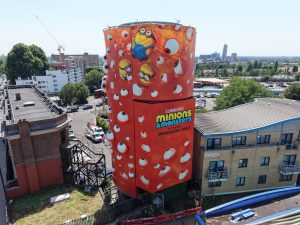
A First for Project Print Management, Scaffold Wrap London on a water tower!
Throughout our history, we have delivered scaffold wraps on commercial developments, office refurbishments, residential schemes and mixed-use construction projects.
But a water tower? Never!
The opportunity to potentially install a scaffold wrap on one of London’s most famous converted industrial structures represents an exciting milestone for PPM.
What makes this project particularly unique is the shape and scale of the building.
Traditional scaffold wraps are usually designed for flat elevations. They are applied to straightforward building facades where graphics can be viewed from a predictable direction.
The Ladbroke Grove Water Tower presents a completely different challenge.
The cylindrical form means graphics must work from multiple viewing angles. The structure’s height creates different sightlines from roads, car parks and pedestrian routes. Its status as a local landmark means any advertising installation must be sympathetic to the building’s character while still delivering impact.
These considerations require a more strategic approach than a conventional building wrap.
For our team, this is exactly the type of challenge that makes large-format print so rewarding.
Creating Value from Temporary Infrastructure
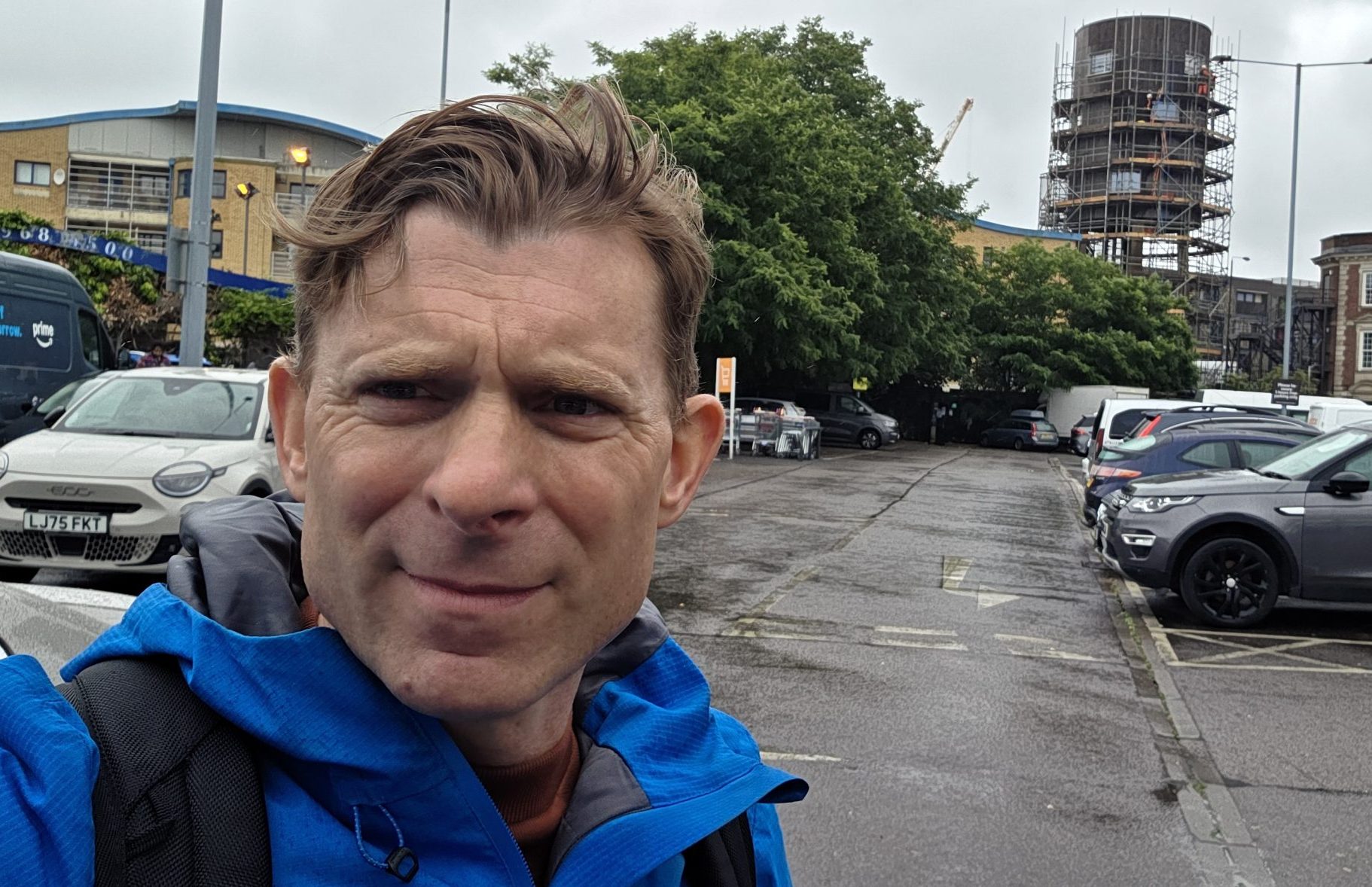
Scaffolding is typically viewed as a temporary necessity.
It enables maintenance, refurbishment and construction works to take place safely and efficiently.
However, forward-thinking property owners and project teams increasingly recognise that scaffolding can also create commercial opportunities.
Large scaffold structures provide substantial surface areas that can be utilised for branding, project promotion or third-party advertising.
In high-profile locations, scaffold wraps can generate significant visibility while simultaneously improving the appearance of construction works.
The Ladbroke Grove Water Tower offers an especially attractive proposition.
Unlike many advertising locations that compete with dozens of neighbouring signs, this structure stands largely alone.
Its elevation above surrounding buildings naturally draws the eye.
Any well-designed scaffold wrap installed on the tower would have the potential to become a highly memorable visual landmark.
A Rare Advertising Opportunity with a Scaffold Wrap London
From an outdoor media perspective, opportunities like this are exceptionally rare.
The combination of architectural significance, location and visibility creates a platform that is difficult to replicate through conventional advertising channels.
The tower occupies a strategic position close to major transport routes and busy urban neighbourhoods.
It is visible to local residents, commuters, visitors and canal users alike.
Because of its unusual shape and fascinating history, the structure already attracts attention before any graphics are applied.
A scaffold wrap simply amplifies that visibility.
Balancing Heritage and Innovation for the Scaffold Wrap London
One of the most interesting aspects of this project is the balance between preservation and innovation.
The water tower itself is a symbol of adaptive reuse.
Originally constructed as emergency infrastructure, it evolved into an architectural residence without losing the industrial character that makes it special.
The scaffold wrap concept follows a similar philosophy.
At Project Print Management, we believe the best projects are often those that encourage people to see familiar structures in a different way.
This project achieves exactly that.
The water tower has already undergone one remarkable transformation—from industrial utility to luxury home.
The potential scaffold wrap represents another chapter in that story.
Looking Ahead
As refurbishment works continue, discussions around the future use of the scaffold remain ongoing.
What is already certain, however, is that the Ladbroke Grove Water Tower has become one of the most memorable projects we have encountered.
Not because it is the biggest structure we have worked on.
Not because it is the tallest scaffold.
But because it combines history, architecture, creativity and commercial opportunity in a way that very few projects can.
For Project Print Management, it represents a genuine first—a scaffold wrap opportunity on an iconic converted water tower that has already earned its place in London’s architectural story.
It is a reminder that innovation often comes from looking at familiar structures differently.
Sometimes a water tower becomes a home.
Sometimes scaffolding becomes a marketing platform.
And sometimes a project arrives that reminds you why creative thinking remains at the heart of great print and advertising solutions.
Keep up to date on the project and go to our blog page. or contact us for more details