
When budgets are tight, locations are remote, or access is limited, self install building wraps can offer a practical and cost-effective solution. While large-scale scaffold wraps typically require professional installation teams, smaller or well-planned projects can be successfully installed by experienced site contractors with the right preparation and guidance.
Project Print Management recently supported a client on the Isle of Man with a self install building wrap for a major motorcycle event. The building, located directly in front of The Black Dub, was undergoing refurbishment and presented an unsightly backdrop at one of the island’s most popular spectator gathering points.
With thousands of racing fans visiting the island, presentation mattered. The solution: a carefully designed mesh building wrap that the client could install themselves, supported by our technical guidance.

When Are Self Install Building Wraps Appropriate?
Self install building wraps are not suitable for every project. Large and high-level wraps — typically over 100 square metres or above five metres in height — can pose significant risks if handled by unqualified teams. Working at height and securing large printed panels to scaffolding structures requires expertise and compliance with safety regulations.
However, in some situations, self installation can be viable:
-
When scaffolding is already in place
-
When experienced scaffolders are available
-
When the wrap size is manageable
-
When proper wind load calculations are confirmed
-
When clear installation guidance is provided
In this case, the building was already fully scaffolded for refurbishment, and the existing contractor had the experience required to undertake the installation safely.
Understanding the Site Context
The Isle of Man is internationally known for motorcycle road racing events, particularly the annual Isle of Man TT. During race periods, the island attracts tens of thousands of visitors.
The building in question sat prominently in front of The Black Dub, a key meeting point for racers and spectators. With such high visibility, leaving exposed scaffolding and refurbishment works on display would have diminished the atmosphere and overall event presentation.
A building wrap offered a way to:
-
Conceal refurbishment works
-
Enhance the spectator environment
-
Create a themed visual backdrop
-
Maintain safety around the scaffold structure
Structural Planning and Wind Load Considerations
Before producing the wrap, we worked closely with the scaffolding contractor to confirm that the existing structure could safely accommodate the additional wind load.
Mesh PVC was selected specifically because:
-
It allows wind to pass through
-
It reduces pressure on the scaffold
-
It is lighter than solid PVC
-
It remains durable in exposed conditions
The Isle of Man is known for changeable coastal weather. Wind loading is always a critical consideration when installing large printed materials onto scaffold.
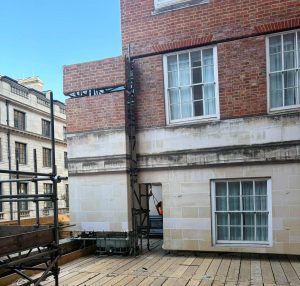
We provided guidance on installing a simple scaffold sub-frame using Allen key (key clamp) fittings. This secondary frame ensured the printed wrap would remain:
-
Tensioned evenly
-
Set slightly away from projecting scaffold poles
-
Protected from friction damage
Without a sub-frame, movement in high winds can cause the mesh to rub against scaffold elements, potentially leading to tearing or punctures.
Why the Sub-Frame Is Important
The scaffold sub-frame plays a crucial role in self install building wraps. It creates a clean, flat fixing surface that keeps the wrap:
-
Taut
-
Evenly distributed
-
Clear of obstructions
-
Structurally stable
Mesh wraps naturally move slightly in wind conditions. Allowing controlled movement reduces stress and prolongs the life of the material. Installing the wrap directly against projecting scaffold poles can cause wear points over time.
By tensioning the mesh against the sub-frame rather than the main scaffold structure, the installation remained both secure and visually professional.
Fixing Method: Bungee Cord Lacing
The wrap was secured using bungee (shock cord) laced around the perimeter through eyelets positioned every 300mm.
Bungee cord is commonly used for mesh building wraps because it:
-
Allows controlled flexibility
-
Maintains consistent tension
-
Absorbs wind movement
-
Reduces stress on fixing points
Unlike rigid fixings, shock cord adapts to changing wind conditions. This is particularly important in exposed environments such as the Isle of Man.
Preparing the Artwork for a Self Install Building Wrap
Design is one of the most critical aspects of any building wrap — particularly for self installation. Once printed and shipped, making adjustments becomes costly and time-consuming.
The original building and surrounding properties were finished in white render. A predominantly white wrap would have appeared flat and lifeless, resembling a plain sheet rather than a convincing façade.
For a building wrap to look realistic, it requires depth and visual detail. The busier and more textured the design, the more authentic it appears from a distance.
After discussing options with the client, we proposed using a grey stone brick design inspired by local architectural finishes.
Creating a Realistic Facade Design
Using the architect’s line drawings as a template, we overlaid detailed stonework graphics to create the appearance of a completed façade. Additional elements included:
-
Slate roof tiles
-
Subtle shadow detailing
-
Window framing
-
A light blue vignette within the window areas
The blue window treatment added visual depth and avoided the “flat print” effect that can occur with simple colour blocks.
Because the building wrap concealed active scaffolding, the design had to be convincing at both close range and from across the road.
Adding Character to the Wrap
Given the motorcycle event setting, the client wanted to add personality to the design. Two life-size images of well-known motorcyclists were incorporated into the artwork.
These additions helped the wrap:
-
Engage spectators
-
Reflect the spirit of the event
-
Create a photo opportunity backdrop
-
Increase social media visibility
Blending themed imagery into architectural replication ensured the wrap felt relevant without appearing overly promotional.
Printing and Finishing
The self install building wrap was digitally printed onto high-quality mesh PVC using large-format print technology to ensure sharp detail and accurate colour reproduction.
Finishing included:
-
Reinforced webbing around all edges
-
Eyelets positioned at 300mm intervals
-
Durable seam construction
This finishing specification ensured the wrap could withstand tensioning and outdoor conditions during the event period.
Once complete, the wrap was carefully packaged and shipped to the Isle of Man, ready for installation by the local scaffold team.
Shipping and Remote Project Support
One of the advantages of self install building wraps is reduced logistical cost. Sending a full installation team to the Isle of Man would have significantly increased the project budget.
Instead, we provided:
-
Detailed installation guidance
-
Sub-frame specifications
-
Fixing instructions
-
Wind load considerations
-
Ongoing remote support
With the right preparation, the local team was able to complete the installation efficiently and safely.
The Final Result
The finished building wrap transformed what had been an exposed refurbishment site into a visually engaging façade.
Positioned in front of The Black Dub meeting point, the wrap quickly became part of the event atmosphere. According to the client, it was “the talk of the island.”
Spectators gathered in front of it, photographs circulated online, and the refurbishment works were effectively concealed throughout the event period.
Key Considerations for Self Install Building Wraps
While this project was a success, it is important to highlight best practice:
-
Always confirm scaffold load capacity
-
Use mesh PVC in exposed environments
-
Install a proper sub-frame
-
Use flexible fixing methods such as bungee cord
-
Avoid self installation on high or complex structures
-
Seek professional guidance before production
Self install building wraps are not a shortcut — they require careful planning and responsible execution.

When to Choose Professional Installation
For large-scale or high-rise projects, professional installation is strongly recommended. Projects exceeding 100m² or above five metres in height present safety risks that should only be managed by qualified installation teams.
At Project Print Management, we assess each project individually and advise on the safest and most cost-effective approach.
This self install building wrap project on the Isle of Man demonstrates how thoughtful planning, careful design and clear technical guidance can deliver impressive results — even in remote locations.
By combining:
-
Detailed architectural artwork
-
Event-themed imagery
-
Mesh PVC material
-
Scaffold sub-frame installation
-
Bungee cord tensioning
the client was able to conceal refurbishment works and enhance the motorcycle event experience.
Self install building wraps can be an effective solution when properly planned and supported. If you are considering a similar project, our team can provide design, print and remote installation guidance to ensure your wrap looks professional and performs safely.
For more information on self install building wraps or for our latest print projects please visit our blog. For more information on building wraps please visit here.