Portable cabin building wrap or Temporary site buildings are a common feature on construction projects across the UK. From welfare facilities and canteens to administrative offices, portable cabins provide essential space when permanent structures are not yet available. However, as these buildings age, their appearance and structural integrity can quickly deteriorate.
At Project Print Management, we were recently commissioned to deliver a portable cabin building wrap for a busy construction site where the existing office block had seen better days. What made this project particularly unique was that the building had no printed branding or graphics — and was already nearing the end of its useful life. Despite this, the client needed the structure to remain operational for at least another ten years.
The brief was clear: improve the appearance of the ageing portable office complex while protecting and strengthening the exterior envelope. The solution required careful planning, durable materials and a practical installation strategy.
The Challenge: An Ageing Portable Office Complex
Unlike many of our projects where graphics and branding are central, this portable cabin building wrap focused primarily on refurbishment and protection.
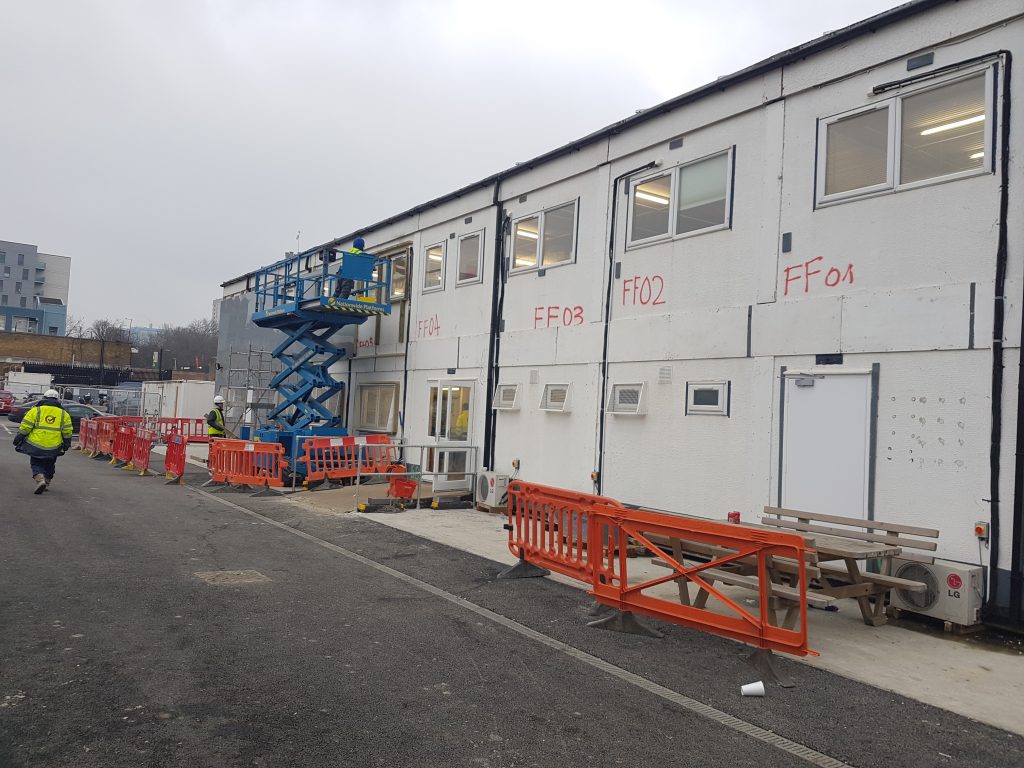
The temporary building was made up of several interconnected cabins, forming a large block used as:
-
Site offices
-
Welfare facilities
-
Staff canteen
-
Administrative space
Years of exposure to the elements had left the exterior surfaces weathered and, in places, badly rotting. Panels were uneven, surfaces were degraded, and parts of the façade had weakened significantly.
To make matters more challenging, the client confirmed that the structure needed to remain in use for another decade. Replacing the building entirely was not a viable option due to cost and site logistics. Instead, they required a practical cladding solution that would:
-
Protect the external structure
-
Improve overall appearance
-
Extend the building’s lifespan
-
Provide a durable, low-maintenance finish
This is where a specialist portable cabin building wrap solution proved invaluable.

Choosing the Right System for Long-Term Protection
In this case, traditional printed wrap materials were not suitable. The existing surface condition meant that a more robust and structural approach was required.
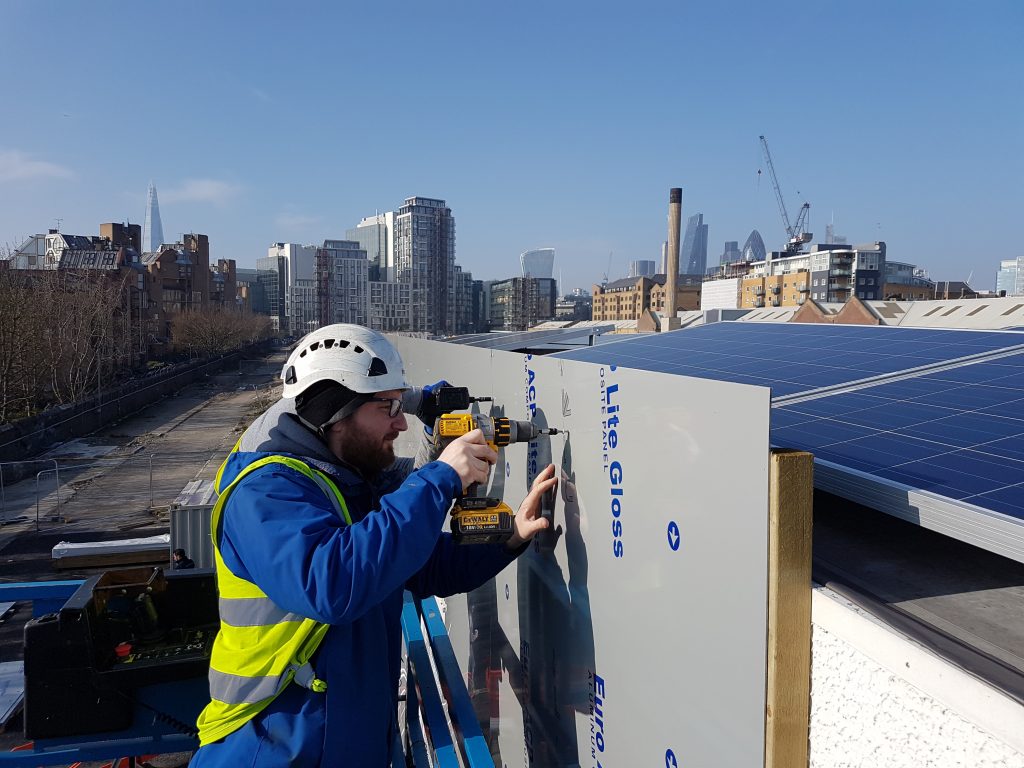
After assessing the building, we determined that the most effective solution would be to clad the entire exterior using 3mm self-colour aluminium composite panels.
Why Aluminium Composite Panels for Portable cabin building wrap?
Aluminium composite sheets are a premium cladding material widely used in commercial and architectural applications. They consist of:
-
Two 0.30mm aluminium outer layers
-
A polyethylene core
-
A factory-applied durable finish
This combination provides strength, stability and weather resistance without excessive weight.
Key benefits include:
-
Excellent durability in outdoor environments
-
Resistance to moisture and corrosion
-
Clean, modern appearance
-
Five-year manufacturer’s external guarantee
-
Low maintenance requirements
For a structure that needed to remain functional for another ten years, aluminium composite panels offered both immediate visual improvement and long-term protection.
Efficient Material Planning
Aluminium composite panels are available in a range of sheet sizes, allowing flexibility in application. For this project, we used:
-
1220mm x 2440mm sheets
-
1500mm x 3000mm sheets
Careful planning of sheet sizes allowed us to minimise waste and ensure efficient coverage across the varied cabin elevations. Because the building consisted of multiple joined units, dimensions varied slightly across sections, requiring precise measurement and cutting.
Material optimisation was important not only for cost control but also to maintain a consistent finish across the façade.
Preparing for Installation
One of the biggest challenges of this portable cabin building wrap was the uneven and deteriorating surface beneath.
The original cabin walls were no longer structurally reliable in certain areas. Simply fixing panels directly to the existing exterior would not have provided sufficient support.
Installing a Treated Timber Sub-Frame
To overcome this, we installed a treated timber sub-frame across the building’s external face.
This sub-frame served several critical purposes:
-
Created a level surface for panel installation
-
Bridged areas where the original structure had rotted
-
Provided secure fixing points
-
Improved overall rigidity of the façade
Using treated timber ensured resistance to moisture and decay, adding another layer of longevity to the building envelope.
By creating a stable and even backing structure, we were able to install the aluminium composite panels with precision and confidence.
Attention to Detail: Fixings and Finish
Achieving a clean, professional finish was essential. Even though this was a refurbishment project rather than a branding exercise, presentation still mattered.
We used stainless steel screws to secure the panels, ensuring corrosion resistance over time. To maintain a seamless aesthetic:
-
Screw heads were colour-matched
-
Fixings were carefully positioned
-
Visible hardware was minimised
Where necessary, colour-matched paint was applied to ensure fixings blended discreetly into the panel surface.
The result was a crisp, uniform exterior that significantly improved the building’s appearance.
Working in Challenging Winter Conditions
Installation took place during extremely cold weather conditions, adding another layer of complexity to the project.
Early morning temperatures dropped to -2°C. When factoring in wind chill — especially when working at height on a scissor lift — conditions felt closer to -8°C.
Cold weather impacts:
-
Material handling
-
Installer comfort and safety
-
Equipment performance
-
Adhesion and fixing precision
Despite these challenges, our experienced team maintained high installation standards throughout.
Fortunately, morale was boosted by the site canteen, which served an excellent English breakfast — a welcome incentive to keep moving in freezing temperatures.
Completing the Project with Portable cabin building wrap
A team of four installers worked efficiently to complete the portable cabin building wrap in just six days.
The finished result delivered:
-
A dramatically improved exterior
-
Enhanced structural protection
-
Extended building lifespan
-
A clean and professional site presence
What was once an ageing, deteriorating temporary structure now presents a durable, modern façade capable of withstanding years of continued use.
The Wider Benefits of Portable Cabin Building Wrap Solutions
While this project focused on structural refurbishment rather than branding, portable cabin building wrap solutions can serve multiple purposes on construction sites:
1. Structural Protection
Cladding systems shield ageing cabins from further weather damage, slowing deterioration and extending usability.
2. Improved Site Presentation
Construction sites are often highly visible. Upgrading the appearance of temporary buildings enhances overall professionalism and reinforces confidence among clients and stakeholders.
3. Cost-Effective Alternative to Replacement
Replacing a multi-unit portable office complex can be costly and disruptive. Refurbishment using durable cladding materials provides a practical alternative.
4. Future Branding Opportunities
Once a stable and clean exterior surface is established, it can be adapted for branded graphics or signage if required.
Why Choose Project Print Management for your Portable cabin building wrap?
Project Print Management provides tailored exterior wrap and cladding solutions for construction sites across London and the UK. Whether the objective is high-impact printed graphics or structural refurbishment, we assess each project individually to determine the most effective solution.
Our services include:
-
Detailed site surveys
-
Material specification
-
Structural sub-frame design
-
Large-format print production
-
Cladding and panel installation
-
Full project management
We understand that temporary buildings often remain in place longer than originally anticipated. Ensuring they remain safe, presentable and protected is essential.
Extending the Life of Temporary Buildings with Portable cabin building wrap
Temporary cabins are designed for flexibility and mobility, but many remain in service for far longer than expected. Weather exposure, wear and tear, and changing site demands can take their toll.
A professionally installed portable cabin building wrap — whether using printed materials or premium composite panels — provides a practical way to:
-
Refresh tired structures
-
Improve durability
-
Maintain compliance
-
Support long-term site operations
In this case, what appeared to be a building nearing the end of its lifespan has now been given a new lease of life — ready to support site operations for many years to come.
If your construction site includes ageing portable offices or welfare units that require refurbishment or protection, Project Print Management can provide a durable and cost-effective solution tailored to your needs.

For more information on portable cabin building wrap please visit our cabin wrap page. Or for our latest project visit our blog