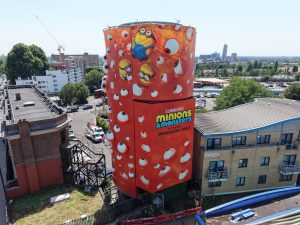
Scaffolding Wrap Advertising: When a building is undergoing refurbishment or construction work, scaffolding is often unavoidable. Although essential for safety and access, scaffolding can have a major visual impact on a building and the surrounding area. This is particularly important in busy retail locations, where shops, restaurants and other businesses may remain open throughout the construction programme.
Scaffolding wrap advertising offers an effective way to disguise unattractive scaffolding while also helping businesses maintain their visibility. With the right design and a carefully considered advertising element, a scaffold wrap can transform a construction site into something far more attractive and commercially useful.
However, before installing advertising on a scaffold wrap, the correct consent may be required. A well-planned design and a strong justification for the advertising can make an important difference when discussing proposals with local authorities.
What is Scaffolding Wrap Advertising?
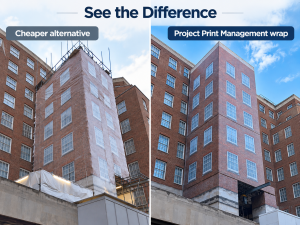
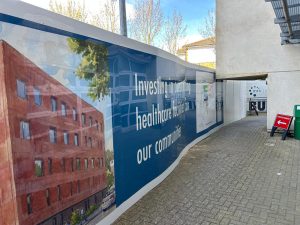
Scaffolding wrap advertising involves installing a large-format printed banner or mesh wrap over a scaffold structure, incorporating advertising or branding into the design.
The wrap itself may recreate the appearance of the building façade, display architectural artwork or use a trompe l’oeil design to disguise the scaffolding. A controlled amount of advertising can then be incorporated into the artwork.
This creates an opportunity to achieve several objectives at the same time:
- Improve the appearance of the construction site
- Keep shops and businesses visible
- Promote the development or property
- Display branding or advertising
- Reduce the visual impact of scaffolding
- Potentially help contribute towards the cost of the wrap
For developers and property owners, this can make Scaffolding wrap advertising considerably more commercially attractive than installing a purely decorative building wrap.
Why Advertising Can Help Fund a Scaffold Wrap
Installing a large scaffold wrap can represent a significant investment, particularly on major buildings in central London.
A printed wrap that simply recreates the original building façade certainly improves the appearance of the construction site, but it provides limited direct financial return for the developer.
Adding an appropriate advertising element can change this.
Advertising space can potentially contribute towards the cost of producing, engineering and installing the scaffold wrap, helping improve the return on investment.
The challenge is achieving the right balance.
A scaffold completely dominated by advertising may be difficult to gain consent for, particularly in sensitive locations. A carefully designed wrap where advertising forms only part of the overall artwork can be much more appropriate.

Helping Shops Remain Visible During Construction
One of the strongest arguments for using a scaffold wrap is the positive effect it can have on businesses operating behind the scaffolding.
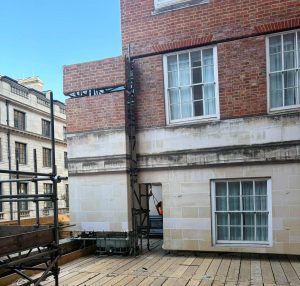
Developers may need temporary pavement licences, scaffold licences or other permissions so construction work can be completed safely. Unfortunately, the resulting scaffold can dramatically change how a retail property looks.
Standard debris netting may make a shop appear closed even when it is trading normally.
Potential customers walking past may simply assume the business is inaccessible and continue elsewhere.
A professionally designed scaffold wrap can help prevent this.
The graphics can clearly show that shops remain open, reproduce important branding, indicate entrances and maintain the visual identity of the building.
This provides a genuine benefit to businesses affected by construction activity.
When considering Scaffolding wrap advertising, demonstrating how the design supports existing shops and helps maintain footfall can form an important part of the overall proposal.
Scaffolding Wrap Advertising in London Conservation Areas
London presents particular challenges because many buildings are located within conservation areas or close to historic architecture, listed buildings and major tourist destinations.
The visual appearance of a construction project therefore matters.
Millions of people visit central London every year, so covering prominent buildings with plain debris netting or unfinished scaffolding can have a significant impact on the streetscape.
This does not mean that every scaffold should become a giant advertising billboard.
Instead, successful Scaffolding wrap advertising often works best when the advertising is integrated into a high-quality architectural design.
The majority of the wrap might recreate the original façade or complement the surrounding architecture, while a smaller area is used for branding, development information or commercial advertising.
This approach can create a much better balance between commercial requirements and the visual character of the area.
How to Improve the Chances of Advertising Consent
Advertising consent will depend on the location, size, design and individual local authority requirements, so every project should be considered independently.
However, the overall quality and purpose of the proposal can be important.
Rather than presenting the project purely as an advertising opportunity, the wider benefits of the scaffold wrap should be demonstrated.
These may include improving the appearance of the construction site, supporting businesses operating behind the scaffold, providing clear pedestrian information and reducing the visual impact of temporary construction works.
The advertising should also appear carefully integrated into the design rather than simply added as a large promotional panel.
Early discussions with the relevant local authority or planning consultant can also help establish what may be acceptable before significant design work begins.
Scaffolding Wrap Advertising Near Leicester Square
A project produced by Project Print Management near Leicester Square in central London provides a good example of how this can work.
The scaffold wrap helped disguise the construction work while maintaining the appearance of the building and surrounding retail environment.
The design also allowed the local shop to communicate that it remained open during the works, while providing space for the developer to promote the project.
Rather than simply covering the scaffolding with blank sheeting, the entire installation became part of the streetscape.
The shop benefited from continued visibility, the developer gained valuable exposure and the appearance of the construction site was significantly improved.
This is exactly what carefully planned Scaffolding wrap advertising should achieve.
Creating Better-Looking Construction Sites
Scaffolding may be temporary, but major construction and refurbishment projects can remain in place for months or even years.
A high-quality printed scaffold wrap can dramatically improve how these projects are perceived.
At Project Print Management, we specialise in the design, production and installation of large-format scaffold wraps, building wraps and printed construction graphics throughout London and the UK.
By combining architectural graphics with carefully considered advertising, Scaffolding wrap advertising can benefit developers, retailers, property owners and the surrounding community.
The key is creating a design that does more than simply advertise.
A successful scaffold wrap should complement its surroundings, disguise the construction work and provide genuine value to the businesses and people affected by the project.
For more information on scaffolding wrap advertising please contact us or visit our blog.