Ensuring a scaffolding structure is safe and capable of withstanding severe weather conditions is always the main contractor’s top priority—and rightly so. In recent years, the UK has experienced an increasing number of extreme weather events, making the need for safe scaffold wraps more critical than ever.
At Project Print Management, safety is not an afterthought. Every printed scaffold wrap we design and install is engineered with wind load, structure integrity, and public safety in mind. A correctly designed and installed scaffold wrap should not fail in storms, even if it is only installed for a short period.
Extreme Weather in the UK: A Growing Challenge
The beginning of 2020 highlighted just how unpredictable and severe British weather can be. Within a short space of time, the UK experienced:
-
Storm Brendan – 13 January 2020
-
Storm Ciara – 8–9 February 2020
-
Gusts of 97 mph recorded at The Needles, Isle of Wight
-
-
Storm Dennis – 15–16 February 2020
-
One of the most intense extra tropical cyclones ever recorded in the UK
-
These storms caused widespread disruption, structural damage, and unfortunately, serious safety incidents. They also reinforced an important fact: temporary structures must be designed as carefully as permanent ones.
Why Safe Scaffold Wraps Matter
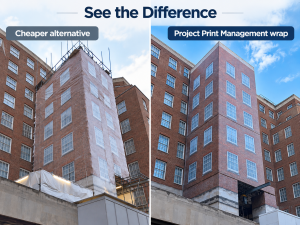
Printed scaffold wraps are very different from standard scaffold sheeting. While both are attached to scaffolding, their performance, purpose, and risk profile are not the same.
Safe scaffold wraps are designed to remain in place under extreme wind loads, not to fail or tear away. This means the scaffolding structure itself must be capable of absorbing and resisting the additional forces created by the wrap.
If a scaffold wrap or its supporting structure fails, the consequences can be severe:
-
Collapse of scaffolding
-
Falling debris
-
Serious injury or fatality
-
Damage to nearby property
-
Legal and reputational consequences
This is why safety must be built into the project from the very first conversation.
Printed Scaffold Wraps vs Scaffold Sheeting
A common misunderstanding is comparing printed scaffold wraps to Monarflex or debris sheeting.
Scaffold Sheeting (Monarflex)
-
Designed to protect workers from wind, rain, and falling debris
-
Eyelets, anchors, and straps are designed to fail
-
Typically fail at wind speeds around 77 mph
-
Failure allows wind to pass through, reducing load on the scaffold
Printed Scaffold Wraps
-
Designed to remain intact
-
Not intended to tear away under pressure
-
Create significant wind loading on the structure
-
Must be supported by engineered scaffolding and sub-frames
Because printed wraps do not “give way” like sheeting, the scaffold structure must be specifically designed to take the load.
Wind Load Calculations: Not Optional
One of the most important elements of safe scaffold wraps is wind load calculation.
Project Print Management will always recommend that wind load calculations are carried out by a qualified scaffold engineer. These calculations assess:
-
Surface area of the wrap
-
Height above ground
-
Local wind exposure
-
Building location (urban, coastal, exposed)
-
Orientation and aspect
-
Fixing method and tensioning
The engineer will also design any projecting scaffold sub-frame required to safely support the wrap.
Without these calculations, installing a scaffold wrap is a risk that no responsible contractor should take.
The Role of the Scaffold Sub-Frame for Safe Scaffold wraps
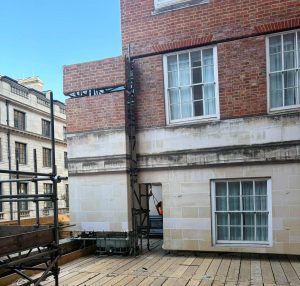
Printed scaffold wraps must never foul on scaffold poles, handrails, or fixings. To prevent this, a projecting sub-frame is used.
Why the Sub-Frame Is Critical
-
Allows the wrap to move slightly in wind without abrasion
-
Prevents tearing or wear at contact points
-
Distributes wind loads evenly
-
Enables proper tensioning
The sub-frame is typically designed to project beyond the main scaffold structure, creating a smooth perimeter for the wrap to sit on.
Who Installs the Sub-Frame?
There are two options:
-
Installed by the main scaffolding contractor
-
Supplied and installed by Project Print Management
If PPM hires and installs the sub-frame, we will also remove it at the end of the contract. Regardless of who installs it, the sub-frame must match the engineer’s design exactly.
Safe Installation Is as Important as Safe Design
Even the best-designed system can fail if it is installed incorrectly.
Our installation process for safe scaffold wraps includes:
-
Pre-installation checks
-
Confirmation of sub-frame alignment
-
Controlled tensioning of the wrap
-
Correct spacing of fixings
-
Edge protection and finishing
-
Post-installation inspection
We use experienced rigging and rope access teams who specialise in large-format printed installations.

Hoardings Need Just as Much Attention
Scaffolding is not the only structure that needs careful design. Building site hoardings also pose a significant risk during high winds.
Hoarding Wind Load Risks
-
Typically made from 18mm plywood
-
Often over 2.4 metres high
-
Can run for long distances
-
Act as solid wind barriers
The taller and longer a hoarding is, the greater the wind load it experiences.
During Storm Dennis, we witnessed a hoarding panel being blown out and striking a pedestrian. Fortunately, the injuries were not serious—but the incident highlighted just how dangerous poorly designed hoardings can be. Had a child been walking past, the outcome could have been tragic.
Designing Safe Hoarding Structures
Safe hoardings require:
-
Correct post spacing
-
Adequate ground fixing
-
Structural calculations where required
-
Secure panel fixings
-
Regular inspections
Printed hoardings must be treated as structural elements, not decorative additions.
Collaboration Is Key to Safety
At Project Print Management, we believe safety is a shared responsibility. We work closely with:
-
Main contractors
-
Scaffold contractors
-
Structural engineers
-
Local authorities
-
Health and safety teams
By collaborating early, we ensure that printed scaffold wraps and hoardings are integrated safely into the overall construction plan.
Our Safety Record on Safe Scaffold wraps
We are proud to say that Project Print Management has never had a scaffold structure or hoarding fail due to weather.
This is not by chance. It is the result of:
-
Conservative design decisions
-
Engineer-led planning
-
Quality materials
-
Skilled installation teams
-
Clear communication with all parties
Safe scaffold wraps are not just about compliance—they are about protecting lives.

Key Safety Principles We Follow for Safe Scaffold wraps
Every project adheres to the following principles:
-
Wind load calculations are essential
-
Scaffold wraps are engineered, not improvised
-
Sub-frames must be purpose-designed
-
Installation teams must be experienced
-
Structures must be inspected regularly
-
Public safety comes first
Final Thoughts: Safety Is Non-Negotiable
With increasingly unpredictable weather patterns, the importance of safe scaffold wraps cannot be overstated. Printed wraps can be visually impressive and commercially valuable, but they must never compromise safety.
At Project Print Management, we design and install printed scaffold wraps and hoardings that stand up to storms—not just visually, but structurally. By working with qualified engineers and experienced contractors, we ensure that our installations remain secure, even in the harshest conditions.
When safety is built into every stage of the process, scaffold wraps don’t come down in storms—and that’s exactly how it should be.

For more information on how to get safe scaffold wraps please contact us. For some of our latest print projects please visit our blog page.