Photographic Building Wraps for Buildings and Scaffolding
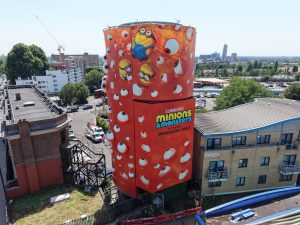
A Photographic Building Wrap is an increasingly popular way to transform the appearance of buildings, scaffolding and large structures. As large-format digital printing has become more affordable in recent years, building wraps are now a practical option for both decorative and commercial applications.
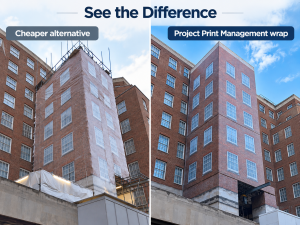
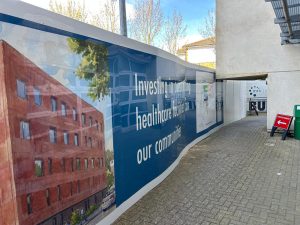
Project Print Management can produce and install digitally printed mesh or PVC wraps for buildings, towers, high-rise structures and scaffolding. These large-format graphics can be used to improve the appearance of a construction site, disguise renovation work, reproduce an architectural façade or create a highly visible advertising display.
Bredan Perring of Signlink magazine on Photographic Building wrap
In an interview with Bredan Perring of Signlink magazine Justin Murray talks about the challenges faced when tasked to produce a building wrap.
Building and scaffolding wraps are often visually arresting and high impact. Brendan Perring explores the continued obstacles to this sectors growth and the best materials and techniques from those in the know.
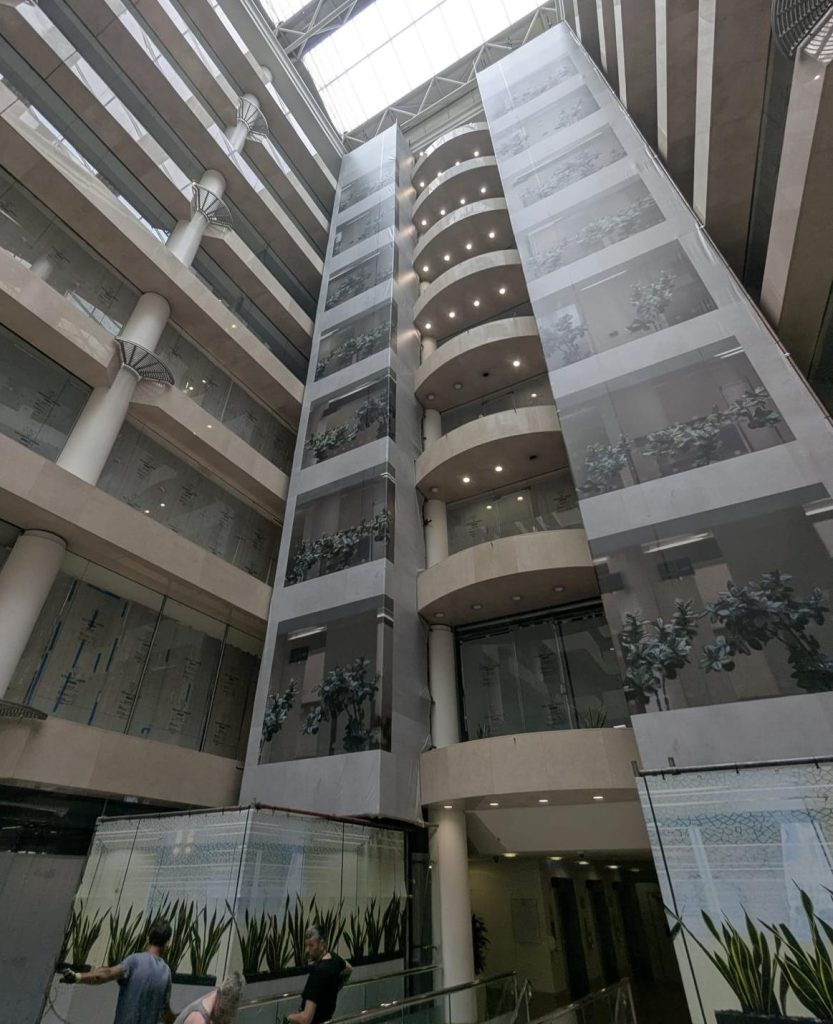
As I walked round the bend of my local high street recently I did a double take as a ripple ran across the front of a high-rise building. Rather than the realisation of the Matrix, it was simply a building wrap using CGI (computer generated imagery) to provide a highly realistic finish.
A few years ago the building and scaffolding wraps sector of the industry saw a boom in high-profile applications, and while it has continued to grow slowly, it has not quite fulfilled its potential.
The main reason for this slow uptake is that it is unable to generate a major revenue stream within our urban areas and continues to remain largely an aesthetic covering for building or restoration work – hamstrung by stringent planning laws.
This said, some of its major players are pushing it new and more revenue friendly directions.
Obstacles to growth
Justin Murray says building and scaffolding wraps are still mainly used for hiding scaffolding and as decorative pieces
One company that has been trying to bang the drum for building and scaffolding wraps has been Godalming based Print Project Management. But as senior consultant Justin Murray explains, it is not an easy task.
“We have seen a boost in enquiries on this time last year as there is more building work going on in general, specifically to do with the 2012 Olympics. But I would say the main bone of contention for us is still planning permission. Building wraps are still mainly used for hiding scaffolding and as decorative pieces, rather than for an advertising revenue stream,” says Murray.
“If a building or scaffolding wrap is within the Westminster boundary you can forget being able to put branding on it, you need planning consultants and a raft of people to work it through. Sometimes you can do retrospective applications and work with the council to gain planning permission once it is up. But we would be a lot busier if the councils were just a little more easy on what is possible,” he continues.
“The principle objection is that the wrap has to be of benefit to the community and has to enhance the local environment. It does happen that building wraps are approved, such as the Fort Dunlop site, but that was only because it was on the M6 and hiding a building that was in disrepair.”
So how are Photographic Building wrap made?
PPM use a HP Scitex XL1500 super wide format printer with a 5 meter width. And carry out most of their jobs using Neschen’s polyester based ‘SolvoTex PVC Supreme Mesh, which weighs in at 350g/m2. And the company’s highly realistic output is made possible through the use of CGI technology to re-create building fascia for the printed graphics.
As Murray points out, the sectors other major problem is the use of low-grade materials by companies that do not have the skills or expertise to carry out the job correctly – which leads to shoddy work that further entrenches councils and local authorities anti-wrap mentality. Neschen says the key strengths of any substrate being used for building and scaffolding wraps has to be ultra-durability, fungus and UV resistance, and double-sided printing capability.
“We personally use materials with good fire rating and tear strengths. Allot of the cheaper stuff coming out of China doesn’t weld particularly well, and god forbid if there was an issue, it would be very difficult to get an audit trail back to ascertain liability. I would like to think this sector was going to get bigger, but whether the councils will relax I don’t know,” concludes Murray.
What Is a Photographic Building Wrap?
A Photographic Building Wrap is typically produced using digitally printed mesh banner material or PVC. The printed material is installed onto a specially designed sub-frame positioned around the building, scaffold or structure.
The finished wrap can display almost any photographic image, architectural design, branding or artwork. In many cases, the graphic can cover an entire elevation or even wrap around the complete building.
This makes photographic building wraps particularly effective for large construction and refurbishment projects where appearance is important.
Large-Scale Installation
One of the major advantages of a photographic building wrap is its scale. There is effectively very little restriction on the size of the finished graphic, providing the supporting structure has been correctly designed.
Large-format building wraps can cover several storeys and create an impressive visual impact from a considerable distance.
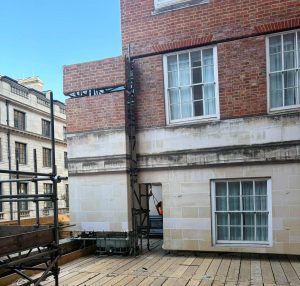
However, projects of this scale require careful planning. Wind loading, fixing methods, scaffold design, sub-frame construction and the type of print material all need to be considered before installation.
Poor-quality materials or unsuitable installation methods can potentially create safety problems, particularly on very large or exposed structures.
For this reason, building wraps should always be managed by an experienced company with knowledge of large-format print, structural fixing systems and installation techniques.
Professionally Managed
Project Print Management specialises in managing complex building wrap projects from initial survey through to printing and installation.
Depending on the project, we can advise on suitable materials, sub-frame systems and installation methods to help ensure the finished wrap remains secure, tensioned and visually impressive.
When professionally designed and installed, a Photographic Building Wrap can provide a safe and highly effective solution for disguising construction work or creating a major visual feature.
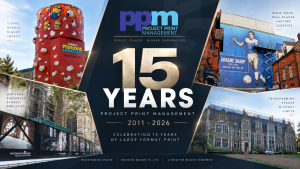
Over the years, Project Print Management has worked on a wide range of high-profile building wrap projects, including installations associated with Everton Football Club, The Monument in London, Tate Britain and Channel 5.
Whether the objective is advertising, branding, architectural disguise or improving the appearance of a construction site, photographic building wraps provide one of the largest and most visually striking forms of printed graphics available.
For some of our latest building wraps project please visit our blog page. or for information on our Trompe l’oeil Building wrap click here.