Mesh Banner Solutions for Building Wraps and Construction Sites
Mesh Banner: Construction and refurbishment projects are now a permanent feature of the urban landscape, particularly in London and the South East. From major commercial redevelopments to residential refurbishments and basement excavations, scaffolding structures have become a familiar sight. While scaffolding is essential for safety and access, it is rarely attractive—and when left exposed for months or even years, it can cause frustration for local residents, businesses, and visitors.
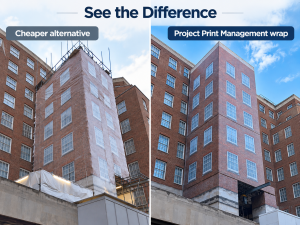
This is where printed building wraps made from mesh banner material play a vital role. Far from being just a visual upgrade, these wraps help manage dust, improve site presentation, and demonstrate consideration for the surrounding community. At Project Print Management (PPM), we specialise in the design, print, and installation of mesh-based building wraps that balance aesthetics, safety, and cost-effectiveness.
Why Mesh Is Used for Building Wraps
There is a common misconception that mesh banners are chosen primarily because they allow wind to pass through. While airflow is certainly a benefit, the main reason mesh is used for building wraps is its lighter weight compared to solid PVC materials.
Scaffolding structures are designed with specific load limits in mind. Adding a full building wrap introduces extra surface area and weight, which must be carefully managed. Mesh material significantly reduces this load, making it the most practical and widely accepted solution for large-scale wraps.
That said, the perforated nature of mesh does help reduce wind pressure, particularly on tall or exposed elevations. When combined with proper fixing methods and correct scaffold design, mesh banners provide a reliable and safe option for wrapping buildings of almost any size.
Mesh Banner Building Wraps Can Be Any Size
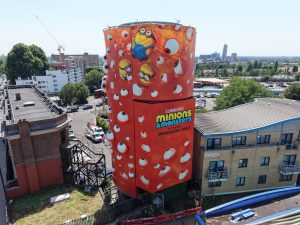
One of the biggest advantages of using mesh banner material is scalability. Building wraps can be produced to suit almost any project, from small residential scaffolds to landmark developments.
We have delivered wraps that:
-
Cover entire museums and public buildings
-
Span multi-storey commercial developments
-
Screen basement excavation sites
-
Conceal partial scaffolding on residential streets
Whether the requirement is to cover a single elevation or an entire façade, the material and print process can be adapted accordingly. Each project is custom-measured, ensuring a precise fit that looks professional once installed.
The Cost of Printed Building Wraps
Another common misconception is that building wraps are prohibitively expensive. In reality, the cost of a digitally printed building wrap on mesh is often far lower than expected—especially when compared to traditional outdoor advertising formats.
For smaller projects, mesh banner wraps can start from around £1,500 + VAT, which typically includes:
-
Up to two hours of artwork
-
Digitally printed mesh banner
-
Installation (West London projects)
For larger-scale projects, pricing is usually calculated per square metre. As a general guide:
-
Printed mesh banner: from £13.00 per m²
-
Installation: from £7.00 per m²
All prices are subject to survey, access requirements, and VAT. It’s important to note that these costs do not include the scaffolding itself or any modifications required to accommodate the wrap, which must be carried out by a qualified scaffolding contractor.
Planning Permission: The Biggest Challenge
In most building wrap projects, the biggest challenge is not production or installation—it is planning permission.
Local councils often discourage building wraps used purely for advertising, particularly in sensitive areas such as conservation zones. Under the Town and Country Planning (Control of Advertisements) Regulations 2007, any form of advertisement above certain heights requires consent.
As a general rule:
-
Advertisements above 4.6 metres from ground level require planning permission
-
In conservation areas, this limit is reduced to 3.6 metres
-
Many parts of London fall within conservation areas
An “advertisement” can be broadly defined and may include:
-
Company names or logos
-
Telephone numbers or web addresses
-
Promotional slogans
-
Fully designed marketing visuals
Because of this, early planning and thoughtful design are essential to avoid delays or refusals.
Making Mesh Banner Building Wraps Commercially Viable
For a building wrap to make sense commercially, it must deliver a return on investment—either through brand exposure or by benefiting the local community in a meaningful way.
From a community perspective, a well-designed mesh banner wrap offers several advantages:
-
It hides unsightly scaffolding and work areas
-
It reduces the visual impact of long-term construction
-
It helps control dust and debris
-
It shows respect for neighbours and passers-by
A tidy, well-presented site sends a clear message that the contractor and client care about how the works affect others. This can significantly reduce complaints and make the overall project run more smoothly.
Designing Without Advertising
One of the most effective ways to navigate planning restrictions is to design a building wrap that does not appear to be advertising at all.
There are several creative approaches that work particularly well:
Architectural CGI or Artist Impressions
A popular solution is to print an artist’s impression or CGI of the finished building onto the mesh banner. This allows residents to visualise the end result and helps maintain a sense of continuity in the streetscape.
Photographic Replication
Another approach is to use high-quality photography of the original building façade. If the scaffolding is already in place, we can photograph a nearby property of similar style and subtly adjust the details so the wrap blends seamlessly into the environment.
Generic Patterns or Natural Imagery
In some locations, abstract patterns or nature-inspired designs—such as greenery or forest imagery—can be very effective. These designs soften the visual impact of construction and are often welcomed by local communities.
By avoiding overt branding or promotional messaging, these designs are more likely to be accepted by planning authorities while still delivering the practical benefits of a building wrap.

The Role of Mesh Banners in Community Relations
Long-term construction projects can strain relationships with neighbours if not managed carefully. Noise, dust, restricted access, and visual disruption all contribute to frustration.
Installing a mesh banner wrap demonstrates a proactive approach to community relations. It shows that steps have been taken to minimise the impact of the works and maintain a clean, professional appearance.
In many cases, this small additional investment pays dividends by reducing complaints, avoiding site stoppages, and maintaining goodwill throughout the duration of the project.
Installation and Safety Considerations
Although mesh banners are lightweight, professional installation is essential. Building wraps must be securely fixed, evenly tensioned, and installed in accordance with health and safety regulations.
Key considerations include:
-
Ensuring scaffold poles do not protrude and damage the banner
-
Using appropriate fixings and tensioning systems
-
Allowing for controlled movement in windy conditions
-
Coordinating installation with scaffolders and site managers
At Project Print Management, we work with experienced installation teams who understand the complexities of working at height and within active construction environments.
Durability and Performance of Mesh Banner
Mesh banner material is designed for outdoor use and performs well in challenging conditions. When printed using high-quality inks, it offers good UV resistance and maintains colour clarity over extended periods.
The perforated structure also reduces stress on fixings, helping the banner remain intact even during adverse weather. With correct specification and installation, a mesh building wrap can remain in place for the full duration of a construction project.
Applications Beyond Construction
While most commonly associated with scaffolding and refurbishments, mesh banners are also used in a variety of other settings, including:
-
Temporary event structures
-
Festival and concert fencing
-
Stadium and sports venue branding
-
Airport and transport hub screening
-
Retail developments and hoardings
The combination of light weight, durability, and visual impact makes mesh banners a versatile solution across many industries.
Why Choose Project Print Management for your Mesh Banner
Project Print Management has extensive experience delivering complex building wrap projects across London and the UK. We understand the technical, creative, and regulatory challenges involved and offer a complete end-to-end service.
Our expertise includes:
-
Creative design and artwork
-
High-quality digital printing
-
Liaison with scaffold contractors
-
Planning-aware design solutions
-
Professional installation
Whether you are managing a small residential refurbishment or a large commercial development, our team can help you find the right solution.
Final Thoughts for Mesh Banner
Mesh banner building wraps are far more than a decorative addition to scaffolding. They are a practical, cost-effective way to improve site presentation, manage dust, support community relations, and enhance the overall perception of a construction project.
When designed thoughtfully and installed professionally, a building wrap can turn an unattractive site into a positive feature—benefiting contractors, clients, and local residents alike.
For advice, pricing, or to discuss your next project, contact Project Print Management today or explore our blog to see examples of our latest work.
For more information please contact us or visit our blog for our latest projects.