In a competitive property market, presentation matters. For developers marketing new homes or mixed-use schemes, site boundaries are no longer just a security requirement — they are a branding opportunity. One of the most effective ways to create impact, particularly after dark, is through illuminated hoarding.
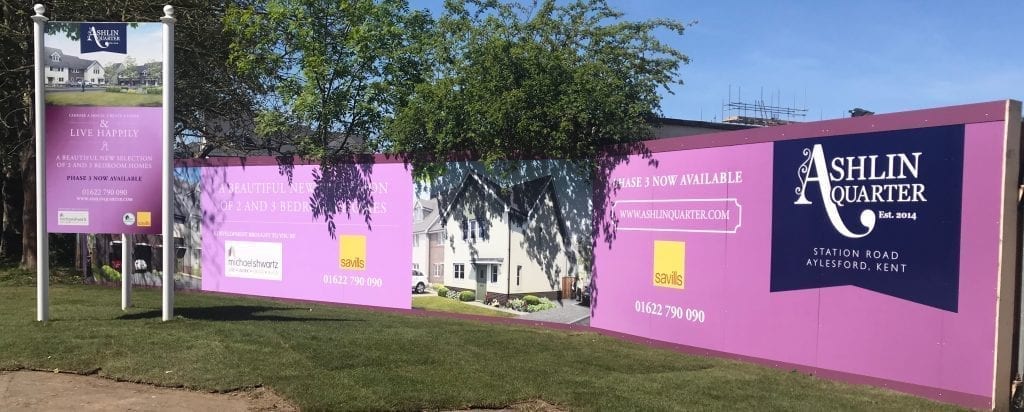
Project Print Management recently delivered an illuminated hoarding solution for a developer in Kent, combining high-resolution print with integrated LED lighting to ensure the development stood out both day and night.
With advances in LED technology, illuminated hoardings are now more energy-efficient, reliable and cost-effective than ever before. When designed and installed correctly, they offer long-term durability and strong visual impact with low running costs.
Why Illuminated Hoarding Makes an Impact
Standard printed hoarding panels are effective during daylight hours, but once evening arrives, their visibility drops dramatically. On busy roads or high-footfall locations, this can mean lost marketing opportunities.
An illuminated hoarding offers several advantages:
-
Increased visibility after dark
-
Enhanced brand presence
-
A premium perception of the development
-
Improved legibility for passing traffic
-
Greater engagement during winter months
For developments located on commuter routes or near major roads, lighting can significantly extend the hours during which marketing messages remain visible.
The Technology Behind LED Illuminated Hoarding
Modern illuminated hoardings typically use LED lightboxes or LED panels to create evenly distributed light across selected areas of the design.
LED systems are preferred because they:
-
Consume minimal electricity
-
Produce very little heat
-
Have long operational lifespans
-
Require minimal maintenance
-
Provide consistent brightness
This makes them ideal for construction environments where reliability is essential.
Planning for Your Illuminated Hoarding
Careful planning is critical when incorporating lighting into a hoarding design. Unlike standard printed panels, illuminated hoarding requires structural coordination before installation begins.
The illumination usually comes from an LED lightbox (sometimes referred to as a sign tray). Ideally, this is installed behind the hoarding structure, with the plywood hoarding cut out to allow light to pass through.
However, in practice, this is not always straightforward.
Hoarding structures contain vertical and horizontal supports which can obstruct the positioning of a lightbox. If this is not considered during the design stage, retrofitting illumination later can be costly and disruptive.
For this reason, artwork layout and lighting placement should be agreed before the hoarding framework is constructed.
Early collaboration between:
-
Developer
-
Hoarding contractor
-
Print production team
-
Electrician
ensures the lighting integrates seamlessly.

Installing LED Lightboxes Behind the Hoarding
Where space allows, installing the LED lightbox behind the hoarding is the cleanest solution visually.
The process typically involves:
-
Installing the hoarding framework
-
Positioning the LED tray behind the panel
-
Cutting the plywood aperture
-
Mounting the printed aluminium composite panel over the opening
This creates a flush finish, with the illuminated section sitting level with the rest of the hoarding.
However, structural constraints sometimes make this approach impractical.
Alternative: Front-Mounted LED Solutions
When installing behind the structure is not possible, the LED system can be mounted to the front of the hoarding.
There are two main options:
1. LED Lightbox (Approx. 80mm Deep)
An LED lightbox with an 80mm depth is robust and widely used. However, because of its thickness, treated timber battens must be fitted around the lightbox to create a cavity between the hoarding structure and the printed panel.
This means:
-
The illuminated section will sit approximately 80mm proud of the hoarding
-
The surface will not be completely flush
-
The lighting feature becomes more prominent
In many cases, this slight projection is not a problem and can even enhance visual impact.
2. Slimline LED Light Sheets (Approx. 8mm Thick)
For projects requiring a minimal projection, LED light sheets are an alternative.
At just 8mm thick, they create a much flatter profile. However:
-
They are significantly more expensive
-
They are custom manufactured
-
Production time is typically 2–3 weeks
For developers working to tight programme schedules, lead times must be factored into the project plan.
Materials Used in This Kent Project
For this illuminated hoarding in Kent, we printed the graphics onto 3mm thick aluminium composite material (ACM), often referred to as Dibond.
Aluminium composite is ideal for construction hoarding because it is:
-
Rigid and durable
-
Lightweight
-
Weather resistant
-
Dimensionally stable
-
Suitable for high-resolution print
The panels were digitally printed at high resolution to ensure sharp branding and crisp typography.
Protection with Anti-Graffiti Laminate
Construction sites are challenging environments. Dust, debris and the risk of graffiti can all affect the appearance of printed panels.
To protect the artwork, we applied an anti-graffiti laminate over the printed ACM.
This laminate provides:
-
Protection against spray paint and marker pens
-
Resistance to UV fading
-
Additional durability against abrasion
-
Easier cleaning
Construction sites generate a significant amount of dust, and hoardings require regular cleaning. Over time, dust can act as an abrasive when wiped down. The laminate layer helps protect the printed surface from premature wear.
CNC Fret Cutting for Illuminated Areas
The illuminated sections of the hoarding were carefully CNC fret cut using a precision router.
This process allows:
-
Accurate cutting of logos and lettering
-
Clean edges
-
Consistent alignment with the LED tray
Once the cut areas were created, they were backed with opal acrylic. This translucent material diffuses the LED light evenly across the illuminated section.
Opal acrylic is essential because it:
-
Softens light distribution
-
Prevents visible hotpots
-
Ensures consistent glow across letters or shapes
The result is a clean, professional finish that enhances brand visibility.
Visibility for Passing Traffic
In addition to the illuminated hoarding panels, the client opted to include a V-shaped sign to engage drivers passing the development.
V-boards are particularly effective because they:
-
Increase viewing angles
-
Capture attention from both directions
-
Maximise roadside exposure
When combined with illuminated elements, this creates a layered visual strategy that reinforces brand recognition.
Energy Efficiency and Running Costs
One of the key concerns developers often have is ongoing power consumption.
Modern LED systems are extremely energy-efficient. Compared to older fluorescent systems, LEDs:
-
Use significantly less electricity
-
Require fewer replacements
-
Produce minimal heat
-
Have long life spans
This makes illuminated hoarding a practical long-term solution, particularly for developments with multi-year build programmes.
Safety and Compliance Considerations for Illuminated hoarding
Electrical installations on construction sites must comply with safety regulations.
All illuminated hoardings should be:
-
Installed by qualified electricians
-
Weatherproofed appropriately
-
Connected via safe power supplies
-
Protected from water ingress
Proper planning ensures compliance and reduces future maintenance issues.
When Should Developers Consider Illuminated Hoarding?
Illuminated hoarding is particularly effective for:
-
Roadside developments
-
High-traffic commuter routes
-
Urban regeneration schemes
-
Winter launch campaigns
-
Premium residential projects
If a site receives significant evening for
footfall or vehicle traffic, lighting can dramatically increase brand exposure.
The Importance of Early Collaboration for the Illuminated hoarding
As demonstrated in this Kent project, the most successful illuminated hoardings are those planned from the outset.
Key considerations include:
-
Structural layout
-
Lighting positioning
-
Artwork design
-
Electrical supply
-
Production lead times
Attempting to retrofit lighting after hoarding construction can increase costs and limit design flexibility.
Engaging print specialists early in the project ensures:
-
Correct spacing between supports
-
Accurate aperture positioning
-
Seamless integration of lighting
-
Efficient installation
Delivering a Premium Finish for Illuminated hoarding
For developers, hoarding is often the first physical touch-point potential buyers have with a new scheme.
An illuminated hoarding signals:
-
Investment in quality
-
Attention to detail
-
Confidence in the development
-
Professional brand presentation
Combined with durable materials and protective laminates, the result is a marketing asset that performs throughout the build programme.
This illuminated hoarding project in Kent demonstrates how integrated LED technology can elevate standard construction hoarding into a high-impact branding tool.
By combining:
-
High-resolution digital print
-
Aluminium composite panels
-
CNC fret-cut detailing
-
Opal acrylic diffusion
-
Energy-efficient LED lighting
-
Anti-graffiti protection
Project Print Management delivered a durable, visually striking solution that stands out both day and night.
For developers seeking to maximise site visibility and create a strong first impression, illuminated hoarding offers a practical and effective option — provided it is carefully planned and professionally installed.
If you are considering illuminated hoarding for your next development, early engagement and expert design input will ensure the finished result achieves both visual impact and long-term performance.
For more information on printed hoardings please visit here. Or for some of our latest work please visit our blog.