Bringing Magic to Restoration: How a Enchanting Printed Scaffold Wrap Transformed Castle Coch Into a Fairy-Tale Experience
Nestled among the dense ancient woodlands north of Cardiff, Castle Coch has long been cherished as Wales’s own fairy-tale fortress. With its conical red roofs, Gothic Revival architecture, and dramatic forest backdrop, the 19th-century castle looks like something lifted straight from a storybook. But even the most magical structures require essential conservation, and in 2024 Castle Coch underwent important restoration work to protect its iconic towers and ornate stonework for future generations.
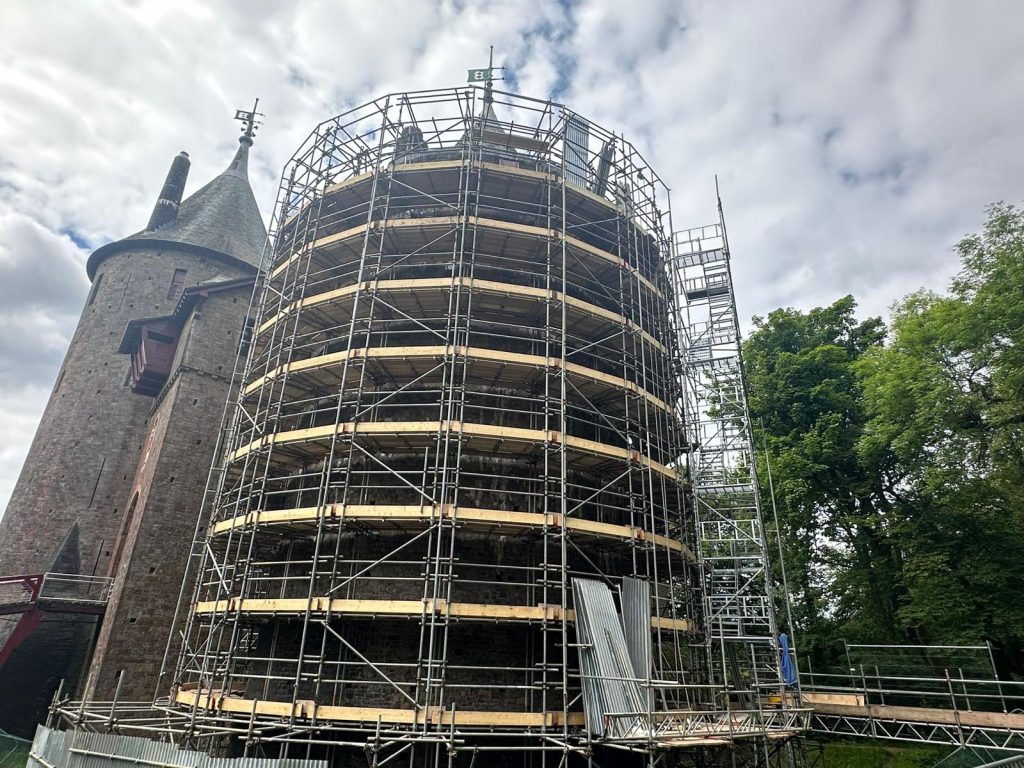
However, restoration brings with it one unavoidable visual challenge: scaffolding. For a building as photogenic and whimsical as Castle Coch, the sudden appearance of a large metal framework could easily dampen the experience for visitors. To prevent that—and to turn necessity into an opportunity—the project team commissioned a vibrant, imaginative printed scaffold wrap designed to captivate visitors rather than disappoint them.
What resulted was a remarkable transformation that not only concealed the scaffolding but invited children and families into a world of enchantment. With an interactive fairy-spotting theme, high-quality print production, and thoughtful conservation measures, the scaffold wrap became a talking point in its own right. It offered a new way for people to engage with the castle, even during its temporary closure for maintenance.
In this detailed look behind the scenes, we explore how the project was conceived, the technical challenges involved, the creative process that brought it to life, and why this imaginative printed scaffold wrap was so warmly embraced by the community.
Turning Enchanting Printed Scaffold Wrap Into a Fairy-Tale Feature
Scaffold wraps have become increasingly popular for heritage sites, but Castle Coch’s installation went far beyond standard printed coverings. The team recognised the castle’s unique atmosphere and wanted the wrap to enhance the sense of wonder, not distract from it.
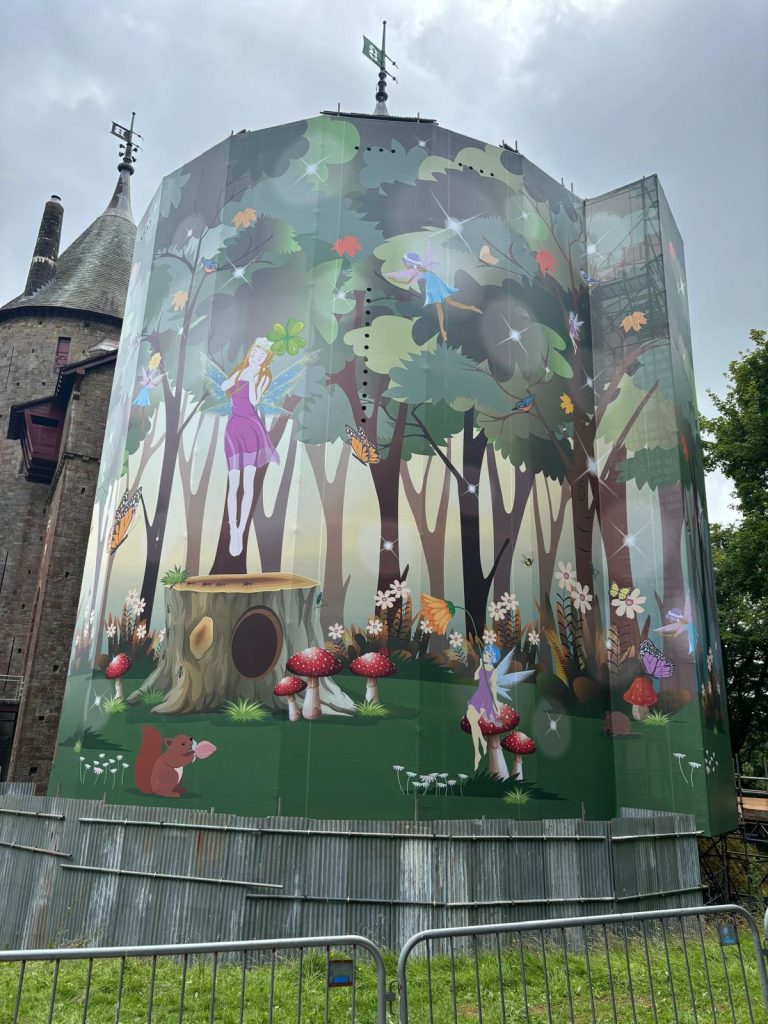
The finished product measured 31 metres wide by 17 metres high, creating a dramatic canvas large enough to be seen from the woodland paths below. Printed on durable, weather-resistant mesh PVC, the wrap was engineered to withstand Welsh winds, reduce strain on the scaffolding, and allow airflow while still delivering a vibrant image.
A Magical Theme for Families and Children
Rather than replicating the castle’s façade, the artwork took a creative direction: a bright, fairy-tale landscape designed to spark imagination. Concealed within the intricate illustrations were tiny fairies for children to find—turning what could have been a dull experience into an engaging activity.
Parents reported that the interactive element transformed their visit. Instead of rushing past scaffolding, families stopped and explored the artwork. Children spent time searching for hidden characters, laughing, pointing things out, and turning the restoration site into a moment of shared discovery.
The fairy-spotting theme proved particularly effective for a site like Castle Coch, which already has an enchanted, otherworldly identity. Integrating playful storytelling with conservation created a sense of continuity during the restoration period, ensuring the castle did not lose its magic—even when partially concealed.
Behind the Scenes: Technical Challenges of the Enchanting Printed Scaffold Wrap
Designing and printing a 31m x 17m mesh wrap is an engineering feat in itself, but installing it on a curved, historic castle tower presented additional challenges that required specialist knowledge.
Wrapping a Cylindrical Tower
Unlike flat modern façades, Castle Coch’s tower is curved, meaning the wrap had to be meticulously shaped and tensioned to follow the structure’s contours without distortion. Skilled installers used precise measurements, creating a layout that matched the tower’s geometry while preserving the integrity of the printed artwork.
The goal was to avoid creasing or stretching—issues that can easily ruin visual impact. Achieving a seamless, smooth appearance required expertise, careful planning, and hands-on precision during installation.
Weather Considerations During Installation
Castle Coch’s elevated woodland position exposes it to varying wind conditions. The mesh PVC material was intentionally chosen for its ability to allow wind to pass through its tiny perforations, reducing the load placed on the scaffolding.
Nevertheless, installation had to be timed carefully. High winds can make handling such a large sheet both hazardous and imprecise, so the project team coordinated the work during safer conditions. Rope access specialists and scaffolding teams worked collaboratively to Lift, tension, and secure the wrap safely and effectively.
Conservation First: Respecting Castle Coch’s Protected Wildlife
Castle Coch is not only a historic landmark; it is also home to protected wildlife. The castle’s towers offer ideal roosting spots for bats, a species legally protected in the UK. Any construction or restoration work in close proximity to a bat habitat must follow strict regulations and ensure no disturbance to their natural behaviour.
Incorporating Bat Access Into the Scaffold Wrap
As part of the conservation effort, the scaffold wrap was customised with special access holes positioned precisely where bats regularly enter and exit the tower. These openings allowed the creatures to pass through uninterrupted during the work.
This thoughtful detail reinforced the project’s commitment not only to preserving the castle’s architecture but also to safeguarding the ecosystem that surrounds it. The installation team worked closely with conservation officers to ensure all activity followed ecological best practices.
Designing the Artwork: Creativity Meets Heritage for the Enchanting Printed Scaffold Wrap
The artwork printed on the wrap did not happen by accident—it was the result of a detailed creative process involving designers, conservation specialists, and project managers.
Balancing Playfulness With Historical Respect
The goal was to produce something visually uplifting, child-friendly, and storytelling-based, without clashing with the castle’s heritage significance. The designers used a palette of colours that stood out against the woodland backdrop while drawing inspiration from the Gothic Revival style of Castle Coch itself.
Whimsy, imagination, and heritage were blended to create a design that:
-
entertained children
-
respected the castle’s architecture
-
attracted visitor attention
-
supported educational engagement
Encouraging Learning Through Play
In addition to delighting young visitors, the fairy-spotting design subtly introduced them to themes of conservation, architecture, and history. By sparking questions—about the castle, the creatures who live there, and why restoration happens—children were naturally guided into learning moments without the need for formal signage or structured explanations.
This approach reflects a growing trend in heritage management: making historic sites more accessible and engaging for younger generations.
Community Response: A Warm Welcome From Visitors and Locals Alike
The printed scaffold wrap received glowing praise from families, teachers, community groups, and regular visitors. Instead of disappointment over the castle being partially obscured, people expressed surprise at how enjoyable the installation was.
Parents commented that:
-
their children were excited to search for fairies,
-
the artwork softened the impact of construction,
-
the wrap made visits memorable despite the restoration period.
Meanwhile, heritage enthusiasts appreciated the wrap’s ability to uphold the castle’s magical aura, ensuring that Castle Coch remained picturesque—even in scaffolding.
The project also sparked positive discussions online, with many sharing photos across social media and praising the creativity and thoughtfulness behind the transformation.
Why This Project Matters: A Model for Heritage Conservation
The Castle Coch scaffold wrap demonstrates how modern creativity can enhance traditional conservation work. Rather than hiding behind plain covers, the project embraced innovation to create something joyful and educational.
Benefits of the Printed Scaffold Wrap Approach
-
Improved visitor experience during restoration
-
Opportunities for learning and engagement
-
Support for wildlife conservation
-
Enhanced visual appeal even during construction
-
Reduced community disruption
-
Positive public perception of the conservation works
By combining imaginative artwork, ecological sensitivity, and technical expertise, the project showcased how scaffold wraps can become more than functional—they can be meaningful.
A Fairy-Tale Restoration Brought to Life
The printed scaffold wrap at Castle Coch turned what could have been an eyesore into a celebrated community feature. With its huge dimensions, mesh PVC durability, enchanting fairy-spotting theme, and environmental sensitivity, the wrap transformed essential restoration into a magical experience for visitors of all ages.
Children were delighted. Adults were impressed. Conservationists were reassured. And the castle retained its iconic charm throughout the work.
In the end, the project proved that with creative thinking, even scaffolding can tell a story—one of imagination, craftsmanship, and respect for history and nature. Castle Coch has always been a place of wonder, and thanks to this innovative scaffold wrap, that magic continued uninterrupted during its restoration.
For more Project please visit our blog or case studies.