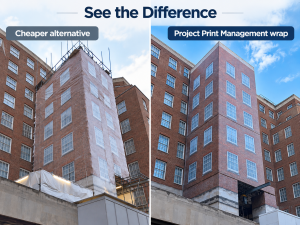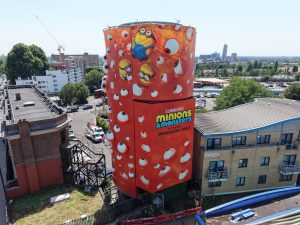

Large-scale heritage renovations demand careful planning, structural protection and public reassurance. One of the most effective ways to achieve all three is through a digitally printed building wrap — a solution that combines weather protection with architectural storytelling.
Our industry colleagues at Big Print in Calgary were awarded the contract to produce and install a digitally printed building wrap to enclose Calgary City Hall during its extensive $34.1 million restoration programme.
This landmark project demonstrates how advanced large-format print technology can protect a historic structure while preserving its visual presence in the cityscape.
Preserving a Landmark During Major Renovation
Historic buildings present unique challenges when undergoing refurbishment. They require:
-
Structural scaffolding
-
Environmental protection
-
Public safety measures
-
Long-term weather shielding
-
Visual sensitivity
In the case of Calgary’s City Hall, the renovation programme was scheduled to last approximately three years. Rather than leaving the iconic building concealed behind exposed scaffolding, a custom digitally printed building wrap was designed to encase the perimeter.
The result was a protective enclosure that maintained civic pride while safeguarding delicate sandstone façades and architectural features.
What Is a Digitally Printed Building Wrap?
A digitally printed building wrap is a large-format graphic enclosure typically installed around scaffolding structures. It serves multiple purposes:
-
Weather protection
-
Dust containment
-
Visual screening
-
Brand or heritage representation
-
Site safety enhancement
Unlike standard scaffold sheeting, a printed wrap replicates architectural details or displays high-resolution imagery. This ensures the building continues to contribute positively to the urban environment even while restoration is underway.
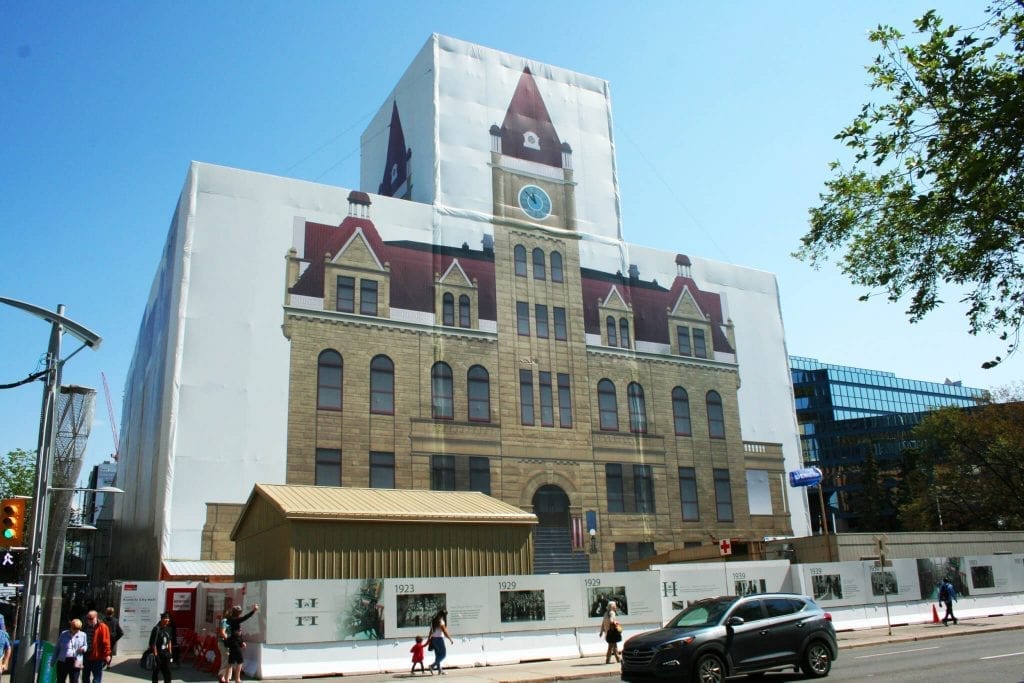
Scale and Structural Complexity
The Calgary City Hall project was remarkable in scale.
The building wrap reached heights of over 35 metres at the clock tower and extended approximately 46 metres across each side of the structure. Installing graphics at this scale required advanced engineering and careful coordination.
In total, more than 3,250 square metres of material were produced and installed over a four-week period.
Large building wraps of this size are far more than oversized banners. They must be engineered to:
-
Withstand wind loading
-
Maintain tension
-
Prevent water ingress
-
Protect underlying surfaces
-
Ensure worker safety
Protecting Historic Sandstone and Workers
The sandstone façade of Calgary City Hall required year-round protection from:
-
Rain
-
Snow
-
Wind
-
Temperature fluctuations
The digitally printed building wrap acted as a heavy-duty enclosure system, shielding exposed building components while work was carried out.
In addition to protecting the building itself, the wrap helped create a safer working environment by reducing weather exposure for contractors and minimising debris movement.
For heritage restorations, this type of enclosure is invaluable. It allows restoration to continue efficiently without prolonged exposure to environmental conditions.
Production of the Digitally Printed Building Wrap
The material specified for the project was AGFA Duratex 510gsm scrim pole banner — a robust PVC-based substrate designed for large-format exterior applications.
Printing was completed on the Fuji 3-metre Uvistar PRO8W UV printer, capable of producing high-resolution graphics suitable for close and long-distance viewing.
Why Material Choice Matters
When producing a large digitally printed building wrap, substrate selection is critical. The material must be:
-
Tear resistant
-
UV stable
-
Suitable for welding
-
Strong enough to withstand tensioning
-
Compatible with large-format UV printing
At 510gsm, the chosen scrim banner material provided the durability required for a multi-year installation.

Engineering the Pocket System
One of the most technically impressive aspects of the project was the engineered pocket system.
Big Print designed a reverse pocket structure to accommodate 38mm aluminium flat bars welded into all edges of each panel. This reinforcement ensured:
-
Even load distribution
-
Structural rigidity
-
Clean visual edges
-
Secure fixing to scaffold
Each elevation of the building was fabricated in at least three sections. The 3.19-metre-wide material was welded into panels measuring approximately 19.8 metres by 15.2 metres.
This fabrication process required meticulous alignment to ensure image continuity across joins.
Installation at Height with Digitally Printed Building Wrap
Installing a digitally printed building wrap at heights exceeding 35 metres is no small undertaking.
The project required:
-
A crew of 10 installation specialists
-
50-metre-high cranes
-
Winches
-
Approximately 2,000 ratchet straps
-
915 linear metres of aluminium flat bar
Each section was lifted into place and secured to a custom-built scaffold structure using ratchet tensioning systems. The scale of logistics alone makes projects of this magnitude complex.
Weather windows had to be carefully monitored, and safety remained paramount throughout the installation period.
Four Weeks, 3,250m², One Landmark Project
Over the course of four weeks, the team successfully installed more than 3,250 square metres of printed material around the historic City Hall.
From street level, the wrap maintained the visual identity of the building, ensuring it remained recognisable to residents and visitors.
From a project management perspective, coordination between engineers, scaffold designers, print technicians and installers was essential to deliver on schedule.
The Role of Digitally Printed Building Wraps in Urban Environments
Large printed scaffold enclosures are becoming increasingly common across major cities worldwide. They offer a practical and visually sensitive solution during redevelopment or conservation.
Key advantages include:
-
Maintaining architectural character
-
Reducing negative visual impact
-
Providing brand or civic messaging opportunities
-
Enhancing site safety
-
Supporting long-term refurbishment programmes
For councils and heritage bodies, digitally printed building wraps strike a balance between necessary construction work and public expectation.
Lessons from Digitally Printed Building Wrap International Projects
Although this project was delivered in Canada, the technical principles apply globally. At Project Print Management, we regularly work on complex large-format print installations throughout the UK.
Successful digitally printed building wrap projects depend on:
-
Early engineering involvement
-
Wind load calculations
-
Material specification expertise
-
High-resolution print production
-
Detailed fabrication planning
-
Experienced installation teams
The Calgary City Hall project demonstrates what is possible when print technology, structural engineering and project management align seamlessly.
Technical Considerations for Building Wrap Projects
When planning a digitally printed building wrap, several factors must be assessed:
Wind Loading
Large surface areas behave like sails. Structural engineers must calculate stress loads to determine fixing requirements and reinforcement methods.
Sectional Fabrication
Massive panels are typically divided into manageable welded sections to ensure safe lifting and installation.
Reinforcement Systems
Pocket systems, aluminium bars and reinforced hems distribute load evenly and prevent tearing.
Installation Logistics
Cranes, winches and ratchet systems are often required for high-rise applications.
Longevity
Multi-year installations must withstand UV exposure, precipitation and temperature variation.
Why High-Resolution Printing Matters
In heritage applications, visual accuracy is essential. The printed imagery must:
-
Match architectural detailing
-
Reproduce colour accurately
-
Remain crisp at scale
-
Withstand close inspection
Modern UV printing technology allows building wraps to replicate stone textures, masonry patterns and architectural shadows with impressive realism.
This ensures that even while renovation is underway, the city’s streetscape remains visually cohesive.
The Future of Digitally Printed Building Wraps
As cities invest in infrastructure renewal and heritage restoration, the demand for digitally printed building wraps will continue to grow.
Advancements in:
-
Sustainable print materials
-
Lightweight reinforcement systems
-
Eco-friendly inks
-
Improved welding technology
are making large-scale installations more efficient and environmentally responsible.
Building wraps are no longer simply functional enclosures — they are carefully engineered architectural graphics.
The digitally printed building wrap installed around Calgary City Hall stands as a powerful example of what can be achieved at scale. Over 3,250 square metres of engineered, high-resolution print now protect the historic structure while restoration work continues.
From material selection and UV printing to pocket engineering and crane-assisted installation, every element required precision and coordination.
At Project Print Management, we understand that delivering large building wrap projects demands more than print capability — it requires structural awareness, safety-first planning and meticulous fabrication.
Whether preserving a historic landmark or concealing a major redevelopment, a digitally printed building wrap offers protection, visual continuity and professional impact on even the most ambitious projects.
For more information on Digitally Printed Building Wrap or scaffold wraps in the United Kingdom click here. Or for our latest print project work please visit our blog.
Call us or email justin.murray@projectprintmanagement.co.uk