When buildings undergo renovation, safety barriers are essential — but they do not have to compromise appearance. A professionally designed decorative hoarding can transform a necessary construction boundary into a visually engaging feature that enhances the surrounding environment.
Project Print Management recently delivered a decorative hoarding solution to conceal pavilion renovation works within the Theobalds Estate in Enfield. The project demonstrates how carefully designed hoarding graphics can effectively disguise construction activity while maintaining a clean, attractive streetscape.
Why Decorative Hoarding Matters on Construction Sites
Hoardings are a legal requirement for most construction and refurbishment projects. They serve to:
- Protect the public from hazards
- Secure the site perimeter
- Control access
- Provide privacy for ongoing works
However, standard timber hoarding panels can appear bland and industrial — particularly in residential areas, parks or heritage settings.
Decorative hoarding provides an opportunity to:
- Conceal unsightly works
- Improve public perception
- Reflect local character
- Enhance community engagement
- Present a professional image
Rather than acting as a visual barrier, printed hoarding becomes a design feature in its own right.
Concealing Pavilion Renovation at Theobalds Estate
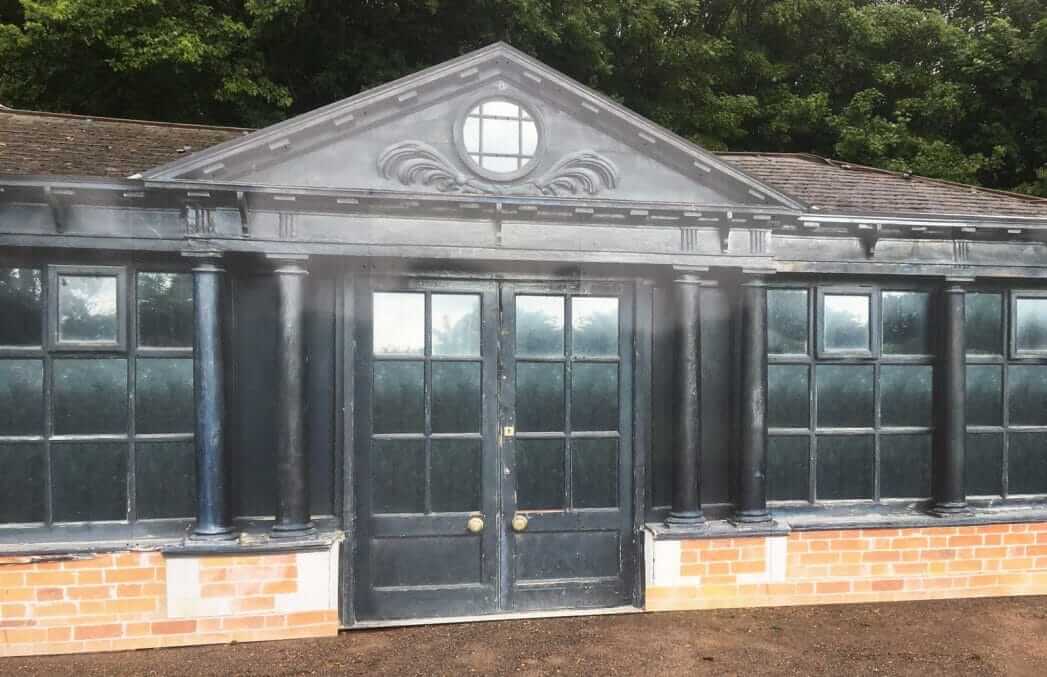
The recent installation at the Theobalds Estate involved a pavilion building that had fallen into disrepair and required urgent renovation.
Located in Enfield, the estate sits within an area of considerable historical interest connected to Theobalds House, also known historically as Theobalds Palace. The original 16th-century stately home was once a significant royal residence before being demolished following the English Civil War. The estate was later rebuilt during the Georgian era and today operates as Theobalds Park, a Grade II* listed hotel and conference venue.
Given this historical context, it was important that the renovation works were concealed in a manner sensitive to the surroundings.
Transforming a Necessary Barrier into a Visual Asset
The pavilion structure required full refurbishment. Before work commenced, hoarding was erected around the building to ensure safety and compliance.
Rather than leaving the perimeter as plain timber, the client chose to invest in decorative hoarding that would replicate the building’s façade and maintain a positive visual presence.
This project is an excellent example of how effective decorative hoarding can be at concealing construction or building work — particularly in areas of heritage or community significance.
The Design Process: Photography and Artwork
Creating a convincing decorative hoarding begins with high-quality photography.
Capturing the Pavilion
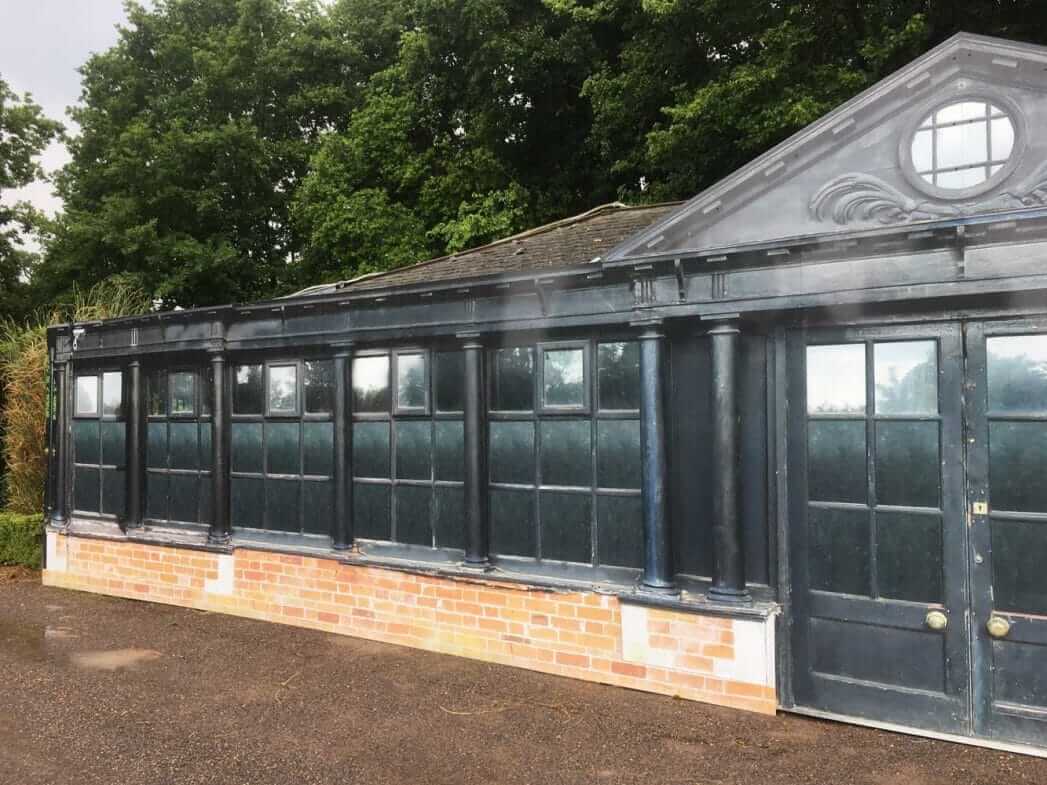
We used a high-resolution digital camera to photograph the pavilion before renovation began. Capturing accurate detail ensures the final printed result can replicate architectural features convincingly at scale.
Art working and Image Refinement
The most important stage of the project was the design and art-working process. Using professional software, we:
- Tidied the façade imagery
- Corrected imperfections
- Balanced colour tones
- Adjusted lighting
- Removed distracting elements
Art working ensures the decorative hoarding presents a lifelike and polished representation of the building — often improved from its pre-renovation state.
Attention to detail during this phase makes a significant difference. Without precise artwork adjustments, the printed panels may appear flat or unrealistic.
Scale and Colour Accuracy
For decorative hoarding to achieve a convincing result, scale and colouring must be exact.
We carefully checked:
- Window proportions
- Brick and stone dimensions
- Architectural alignment
- Overall perspective
If scale is incorrect, the illusion is immediately lost. Similarly, colour mismatches can make the graphic appear artificial.
Going the extra mile in artwork preparation ensures that the finished hoarding blends naturally into its environment.
Understanding Design Costs
The photography and design phase of decorative hoarding projects is charged based on time rather than a fixed creative outcome. Design is inherently subjective — and determining when artwork is “complete” can vary depending on client preferences.
For projects of this nature:
- Photography and art-working costs can range from £400 to £500
- Design time is typically charged at £75 per hour
The investment in careful artwork preparation directly impacts the realism and effectiveness of the final installation.
Production and Installation of Decorative hoarding
Once artwork was approved, the design was printed using large format digital printing technology onto durable outdoor material suitable for hoarding applications.
Decorative hoarding graphics must be:
- Weather resistant
- UV stable
- Durable over extended renovation periods
- Easy to install securely
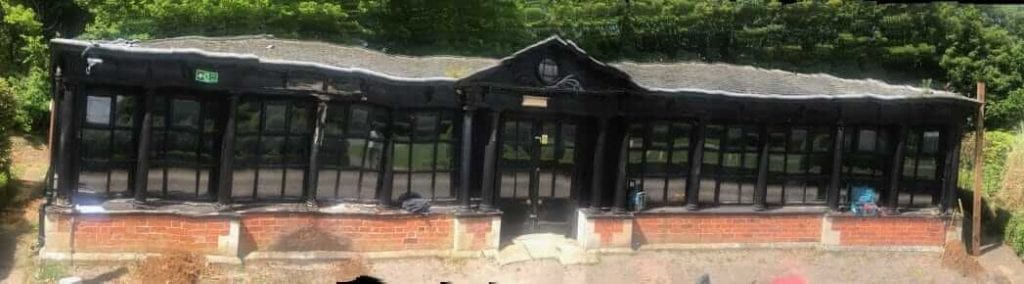
Our installation team ensured the printed panels were aligned accurately across the timber hoarding structure, creating a continuous façade effect.
Careful positioning and clean finishing are essential to maintain the illusion and prevent visible seams from disrupting the design.
Benefits of Decorative Hoarding for Renovation Projects
Decorative hoarding provides a number of advantages beyond basic site security.
1. Enhances Public Perception
Construction work can sometimes generate negative reactions from local residents. A visually appealing hoarding demonstrates care and professionalism, helping maintain goodwill.
2. Preserves the Character of the Area
In locations with historic or architectural significance, decorative hoarding ensures the streetscape remains attractive during renovation.
3. Reduces Visual Impact of Building Works
By replicating the façade or incorporating sympathetic design elements, the hoarding softens the impact of scaffolding and site activity.
4. Offers Branding and Communication Opportunities
While this pavilion project focused on façade replication, decorative hoarding can also incorporate:
- Developer branding
- Project information
- Community updates
- Marketing visuals
This transforms a legal requirement into a communication tool.
Decorative Hoarding and Heritage Sensitivity
Theobalds Estate sits within a historically significant area linked to Theobalds House and its royal heritage. In such settings, standard site hoarding can appear out of place.
A decorative approach allows building owners and contractors to demonstrate respect for:
- Local history
- Architectural style
- Community expectations
By replicating the pavilion’s façade, the hoarding maintained visual continuity throughout the renovation period.
Large Format Printing for Hoarding Graphics
Modern decorative hoarding relies on advanced large format digital printing. This technology enables:
- High-resolution imagery
- Accurate colour reproduction
- Large panel production
- Cost-effective scalability
The durability of modern inks ensures graphics maintain vibrancy even when exposed to weather over extended periods.
Why Choose Project Print Management for your Decorative hoarding?
Project Print Management specialises in decorative hoarding and large format construction graphics across London and the South East.
Our services include:
- Site surveys and measurements
- Professional photography
- Detailed artwork and design
- High-quality digital printing
- Secure installation
We understand that hoardings are both a legal necessity and an opportunity. By combining design expertise with durable materials, we deliver solutions that protect your site while enhancing its surroundings.
Making Construction Sites Look Better with Decorative hoarding
Hoardings do not have to be plain, uninspiring barriers. With thoughtful design and professional execution, decorative hoarding can:
- Conceal renovation work effectively
- Improve the visual environment
- Reflect heritage and architectural detail
- Support community relations
The pavilion project at the Theobalds Estate highlights how a lifelike printed façade can transform a standard construction boundary into an attractive and sympathetic feature.
If your project requires hoarding for safety and compliance, consider how decorative hoarding could improve the appearance of your site while renovation work takes place. Project Print Management can deliver a tailored solution designed to blend seamlessly into its surroundings — ensuring your building remains visually appealing throughout the construction process.