Building Wrapping: How to Prepare Scaffolding Safely and Correctly
Building wrapping has become an increasingly popular solution for concealing scaffolding, improving site appearance, controlling dust, and enhancing public perception during construction projects. However, while the printed wrap itself often gets the attention, the most critical — and frequently underestimated — part of the process is actually preparing the scaffolding.
In reality, the success of any building wrapping installation depends far more on the scaffold design than on the print. Without proper planning, structural calculations, and coordination, even the highest-quality printed wrap can fail — and in extreme cases, poorly prepared scaffolding can present serious safety risks.
At Project Print Management, we work closely with scaffolding contractors, engineers, and site managers to ensure building wraps are installed safely, efficiently, and to a professional standard. This guide explains what needs to be considered when preparing scaffolding for building wrapping and why early planning is essential.

Why Scaffolding Preparation Is Critical for Building Wrapping
The hardest part of any building wrapping project is not the design or the print — it is ensuring the scaffolding is suitable, safe, and compliant.
Once a building wrap is installed, it effectively turns an open scaffolding structure into a large surface that can catch the wind. This creates additional forces that must be accounted for during the scaffold design stage. If these forces are ignored or underestimated, the consequences can be severe.
Wind load calculations are especially important. A wrapped scaffold behaves very differently from an open scaffold, and incorrect calculations can result in movement, instability, or, in worst-case scenarios, structural failure.
For this reason, scaffolding must always be designed and erected by a qualified scaffolding contractor. Where necessary, structural engineers should be involved to calculate wind loads and ensure compliance with current regulations.
Plan for Building Wrapping from Day One
One of the most common and costly mistakes we see is attempting to modify scaffolding after it has already been erected.
If building wrapping is introduced late in a project, the scaffold may not be suitable to accept it. Retrofitting additional frames, projections, or fixing points can be expensive — and in some cases, technically impossible.
To avoid this, building wrapping should be discussed at the very beginning of the project, ideally during the scaffold design phase. This allows:
-
Proper allowance for wind loading
-
Correct positioning of scaffold poles
-
Integration of fixing systems
-
Safer and faster installation
Early planning almost always results in lower costs and a better final outcome.
Choosing the Right Scaffolding Contractor
Because of the additional risks associated with building wrapping, it is vital to work with reputable scaffolding contractors who understand wrapped structures.
In the UK, the National Access & Scaffolding Confederation (NASC) is recognised as the leading trade body for access and scaffolding. NASC members are strictly regulated and required to maintain high standards of safety, training, and compliance.
If you are planning a building wrap installation, we strongly recommend working with an NASC-accredited contractor. More information can be found at:
Their guidance documents are widely regarded as industry benchmarks and are invaluable for clients, contractors, and designers alike.
The Picture Frame Scaffold: A Key Requirement
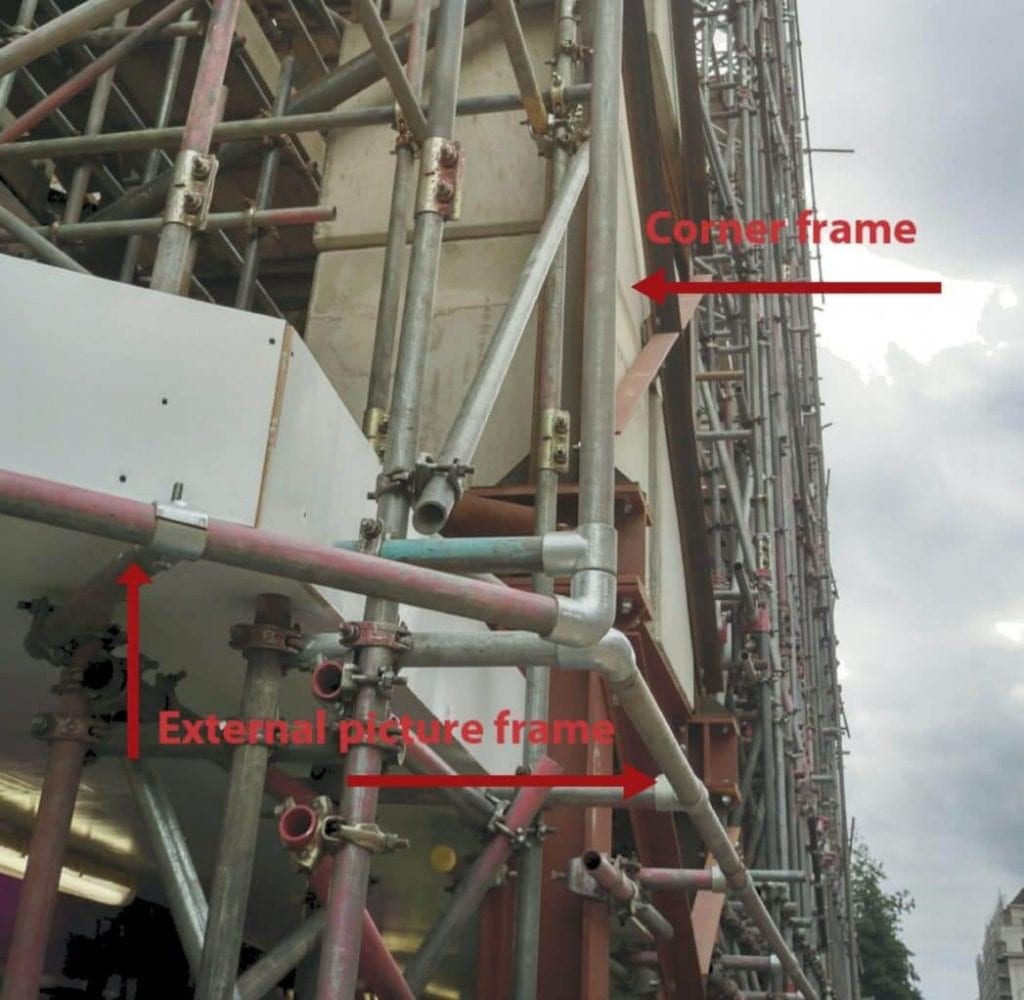
For building wrapping to be installed correctly, the scaffolding must include a picture frame structure.
This picture frame is a smooth, continuous scaffold framework that sits in front of the main scaffold and typically projects around 300mm beyond the outermost scaffold poles. Its purpose is to provide a clean, unobstructed surface for the building wrap to be fixed to and to allow controlled movement in the wind.
Key requirements of a picture frame scaffold include:
-
Smooth, uninterrupted lines
-
No protruding fittings or sharp edges
-
Adequate clearance from the main scaffold
-
Secure fixing back to the main structure
Without this frame, the building wrap can foul on scaffold poles, clamps, or fittings, which will eventually cause abrasion, tearing, or failure of the banner.
Allowing for Movement and Wear
Building wraps are designed to move slightly in the wind. This movement is normal and necessary, but it must be controlled.
If any part of the printed banner rubs against scaffold poles, edges, or fittings, friction will occur. Over time, this will wear through the material and compromise the integrity of the wrap.
To reduce this risk:
-
All projecting poles should be capped
-
The picture frame must sit proud of the main scaffold
-
Sharp edges and fixings must be avoided
-
The banner must be correctly tensioned
Attention to these details dramatically extends the lifespan of the building wrap and improves overall safety.
Wrapping Around Corners and Complex Structures

Building wrapping does not need to stop at flat elevations. Wraps can be designed to turn corners and follow the contours of a building — but only if the scaffolding is designed accordingly.
For corner wraps, the picture frame must be continuous and smooth around the corner. Any breaks or misalignment will prevent the banner from wrapping cleanly and may create stress points in the material.
Complex scaffolding structures require even closer collaboration between the scaffolding contractor, designers, and installers. This coordination ensures the final wrap aligns correctly with architectural features and remains structurally sound.
Surveying the Scaffold: Accuracy Is Essential
Once the picture frame scaffold has been erected, a detailed survey is required before artwork production begins.
This survey provides the exact dimensions needed to create a precise template. The designers then place the building wrap artwork onto this template to ensure it fits perfectly.
Accuracy at this stage is critical:
-
If the banner is too small, bungee cords will be overstretched and the wrap will move excessively
-
If the banner is too large, it will not tension correctly and may develop creases or sagging
Even small measurement errors can result in visual imperfections or installation difficulties, so surveys must be carried out methodically and professionally.
Fixing Methods for Building Wrapping
There are two primary fixing methods used for building wrapping installations: standard fixing and invisible fixing.
Standard Fixing Method
This is the most commonly used method and involves:
-
A perimeter picture frame scaffold
-
The banner sitting approximately 150mm inside the frame
-
Fixing using 12mm bungee cord (shock cord)
This method is reliable, cost-effective, and suitable for most applications. It allows controlled movement while keeping the banner secure.
Invisible Fixing Method
Invisible fixing delivers a cleaner, more seamless appearance but is significantly more complex.
With this method:
-
The printed banner passes up and over the picture frame
-
The scaffold frame must be completely smooth
-
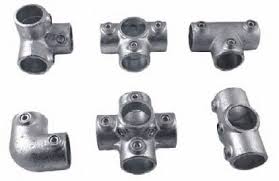
Allen key clamp coupler are used instead of standard fittings
Because the banner slides over the scaffold, any protrusion or unevenness can damage the material. This method requires greater precision from the scaffolding contractor and more time during installation, but the visual result is often superior.
Safety, Compliance, and Responsibility
Building wrapping is not just a visual solution — it is a structural and safety-critical installation.
Responsibility is shared across multiple parties:
-
The scaffolding contractor ensures structural integrity
-
Engineers calculate wind loads where required
-
Designers ensure accurate templates and artwork
-
Installers ensure correct fixing and tensioning
When all parties work together from the outset, building wrapping can be installed safely, efficiently, and with outstanding results.
Why Work with Project Print Management for your Building wrapping?
At Project Print Management, we understand that building wrapping is as much about planning and coordination as it is about printing.
We offer:
-
Early-stage consultation with scaffolding teams
-
Accurate site surveys and templating
-
High-quality large-format digital printing
-
Expert installation support
-
Experience working in conservation areas and complex sites
Our role is to ensure your building wrap not only looks impressive but is installed safely and performs exactly as intended throughout the construction period.
Final Thoughts on Building wrapping
Building wrapping is a powerful way to improve the appearance of construction sites, particularly in sensitive or high-profile locations. However, its success depends entirely on how well the scaffolding is prepared.
By planning early, working with qualified contractors, and paying close attention to scaffold design, you can avoid costly modifications and ensure a smooth, safe installation.
If you are considering building wrapping for an upcoming project and want expert guidance from the start, contact Project Print Management today. We’ll help you get the scaffolding right — before the print even begins.


For more information on building wrap or on how to get the scaffold structure prepared for a building wrap please contact us. For our latest print project please visit our blog page.