
Installing a hoarding design at Westminster Abbey is not like working on a typical construction site. Every decision — from materials and finishes to installation timing — must respect the historical, cultural, and architectural significance of one of the most important buildings in the world.
As construction work begins to transform the Abbey’s 13th-century triforium into a new public viewing gallery, Project Print Management was proud to deliver another carefully considered hoarding design installation for Westminster Abbey. This marked our third project with the Abbey in the same year, reflecting a strong working relationship built on trust, quality, and attention to detail.
A Sensitive Location with Global Visibility
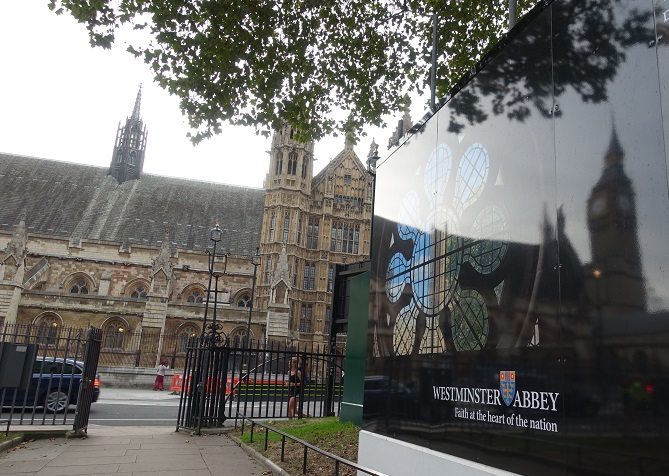
Westminster Abbey is not just a working church; it is a symbol of British history, monarchy, and national identity. Millions of visitors pass through its doors each year, and the area directly outside the main entrance is one of the most photographed and heavily footfall-driven locations in London.
This meant the hoarding design needed to achieve several objectives at once:
- Protect the public during ongoing construction
- Communicate clearly and respectfully
- Complement the Abbey’s historic setting
- Withstand heavy daily use and close public contact
- Maintain a high aesthetic standard
This was not simply about covering a site boundary — it was about creating a hoarding design that felt appropriate in one of the most sensitive heritage environments in the UK.
From Traditional Sign-writing to Printed Hoarding Design
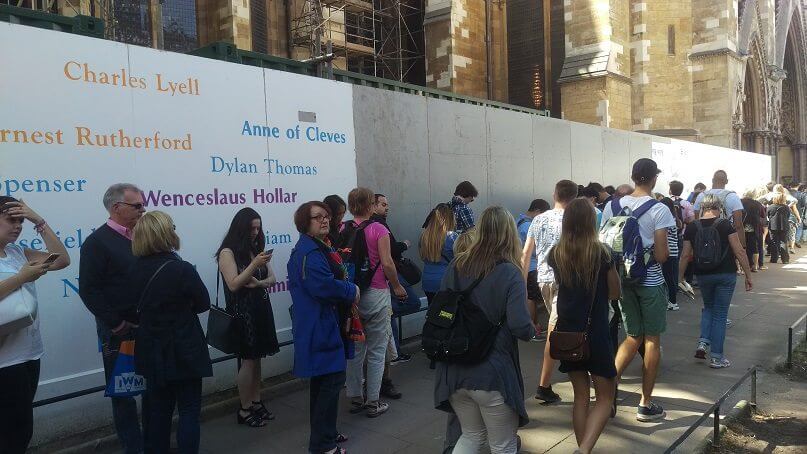
Earlier in the year, Project Print Management had installed traditional hand-painted sign-writing graphics along the hoarding line. These were designed to brighten a temporary tunnel and educate visitors while they queued to enter the Abbey.
Originally, those graphics were expected to remain in place for around twelve months. However, as is often the case with complex heritage construction projects, the site layout evolved more quickly than anticipated. Safety requirements changed, hoarding lines were moved, and sections were removed and reinstated.
Unfortunately, this meant the original sign-writing could not be salvaged.
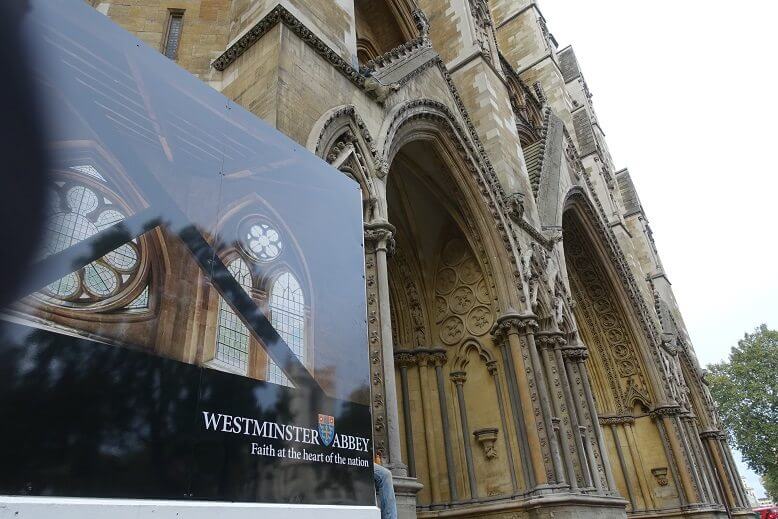
To keep costs under control while maintaining visual continuity, Westminster Abbey opted to reuse the same approved artwork, this time reproduced as a digitally printed hoarding design on aluminium composite panels.
Why Printed Aluminium Composite Panels Were Chosen
For a site like Westminster Abbey, material choice is critical. The hoarding sits directly in front of the Abbey entrance, where visitors queue, gather, and wait — sometimes for long periods.
We recommended 3mm aluminium composite panels (ACM) for several reasons:
- Excellent rigidity and durability
- A smooth, flat surface for high-resolution printing
- Resistance to warping or swelling in wet weather
- A premium finish appropriate for a heritage setting
Each panel was digitally printed at high resolution and then over-laminated with an anti-graffiti film, providing additional protection against scuffs, scratches, and vandalism.
In high-footfall environments, anti-graffiti protection is not a luxury — it is essential for maintaining presentation over time.
A Hoarding Design That Respects Its Surroundings
One of the defining challenges of hoarding design in heritage locations is restraint. The design must communicate information clearly without competing visually with the architecture behind it.
In this case, the hoarding design focused on:
- Clear typography
- A balanced layout
- Subtle use of colour
- Educational content relating to the Abbey and its history
Rather than shouting for attention, the hoarding design was intended to feel calm, informative, and deliberate — something visitors could read while queuing, without feeling overwhelmed.
Installation Timing: Working Around the Public
Because the hoarding was positioned directly in front of the Abbey entrance, installation had to be carried out before the public arrived.
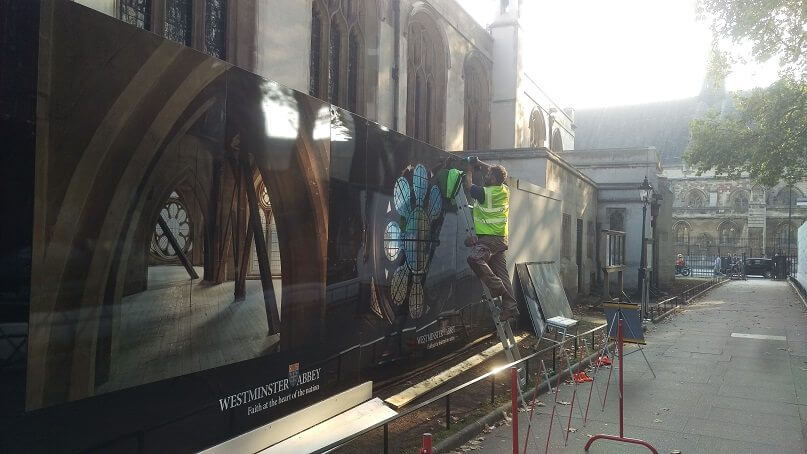
Our installation team arrived on site at 5:45am, just as the sun was rising behind the Palace of Westminster — a reminder of the privilege and responsibility that comes with working in such a historic location.
Early starts are common on high-profile sites, but here timing was especially critical. By mid-morning, queues begin to form, and any disruption would have been unacceptable.
Thanks to careful planning and a well-coordinated team, we were able to install the majority of the hoarding panels by 11am, well before peak visitor numbers.
Precision Installation in a Live Environment
Installing hoarding design panels in a live public environment requires a very different mindset to working on a closed construction site.
Our installers had to:
- Work efficiently without rushing
- Maintain clear pedestrian routes at all times
- Respect security and safeguarding protocols
- Ensure a flawless finish at eye level
Each panel was aligned precisely to ensure consistent joins, straight sight lines, and a clean overall appearance. Even minor inconsistencies would be highly visible in a location where visitors are standing just inches away from the hoarding.
The Role of Hoarding Design in Major Heritage Projects
Hoarding design is often underestimated. Too often, it is treated as a purely functional necessity rather than an opportunity.
At Westminster Abbey, the hoarding serves multiple roles:
- A safety barrier
- An information point
- A visual buffer between construction and public space
- An extension of the Abbey’s identity and values
When handled properly, hoarding design can enhance the visitor experience rather than detract from it — even during major construction works.
About the Triforium Transformation Project
The hoarding design installation forms part of a much larger and historically significant project: the transformation of the Abbey’s 13th-century triforium into a public viewing gallery.
The Queen’s Diamond Jubilee Galleries
The £19 million project will create a new gallery space — known as The Queen’s Diamond Jubilee Galleries — located approximately 70 feet above the Abbey floor.
Key elements of the project include:
- Exhibition of historic objects from the Abbey’s collection
- New public access via a purpose-built stair and lift tower
- Spectacular views across the Abbey interior
- Preservation and reuse of medieval spaces
This will be the Abbey’s most significant architectural addition since 1745, opening up previously inaccessible areas to the public for the first time.
The hoarding design installed by Project Print Management plays a small but important role in enabling this transformation to happen safely and discreetly.
Why Experience Matters in Hoarding Design
Projects like this highlight why hoarding design is not just about printing panels.
It requires:
- Understanding of heritage environments
- Sensitivity to public spaces
- Knowledge of materials and finishes
- Precision installation under time pressure
- Close collaboration with clients and contractors
At Project Print Management, we approach hoarding design as a specialist discipline, not an afterthought.
A Continuing Partnership
This installation represents the third hoarding-related project we have completed for Westminster Abbey in one year — a testament to the value of consistency, reliability, and quality.
Being asked back repeatedly to work on such an important site is something we take great pride in.
Hoarding Design Done Properly
Hoarding design at Westminster Abbey is about far more than enclosing a construction site. It is about respecting history while supporting progress, communicating clearly while remaining understated, and delivering flawless execution in one of the most visible locations in the country.
This project demonstrates how thoughtful hoarding design, high-quality materials, and professional installation can coexist seamlessly with one of the world’s most iconic buildings.
If you’re planning a construction project in a sensitive or high-profile environment and need a hoarding design that reflects the importance of the site, Project Print Management has the experience to deliver it properly.
For more information on printed hoarding and hoarding design, please contact us — or visit our blog to see our latest projects.
Article in trade magazine Image Reports: www.imagereportsmag.co.uk/news/7454-new-imagery-for-westminster-abbey-facade